Last updated November 23, 2026
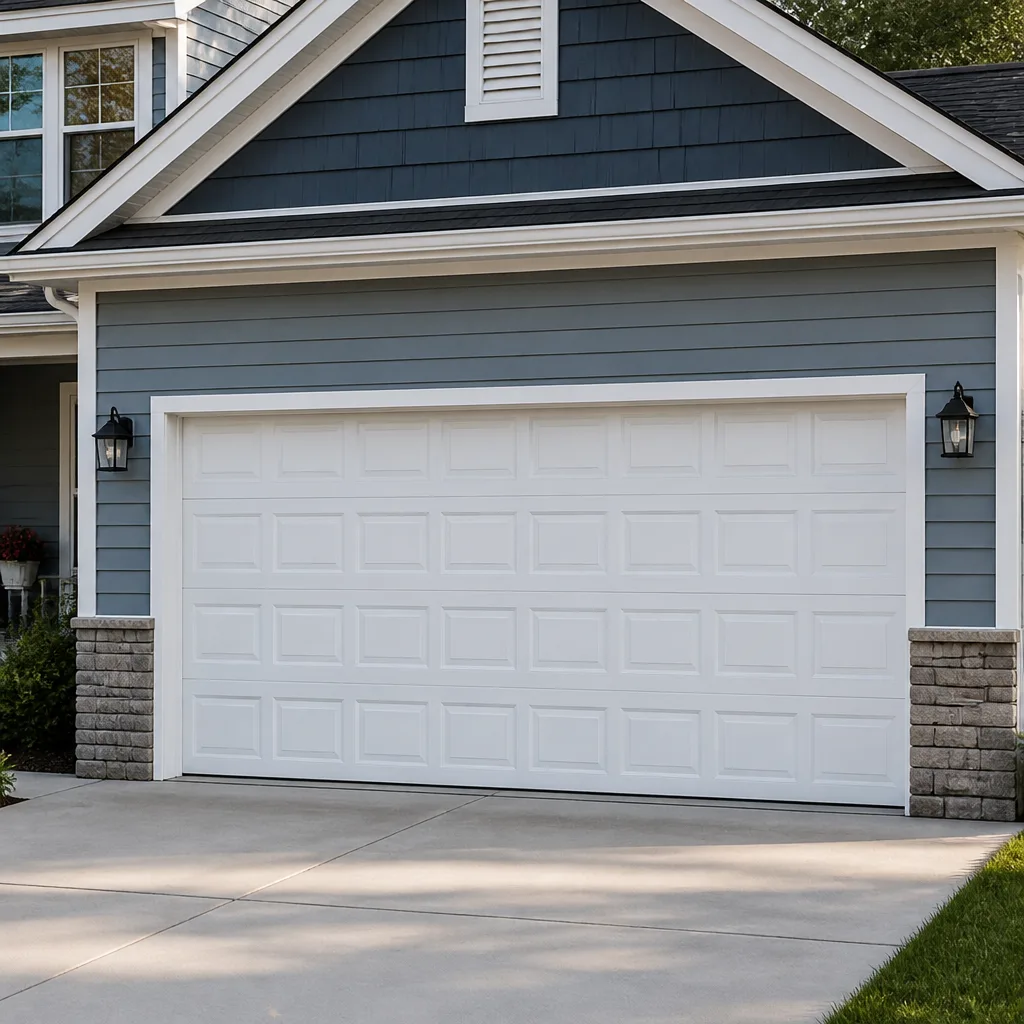 Raised-panel steel
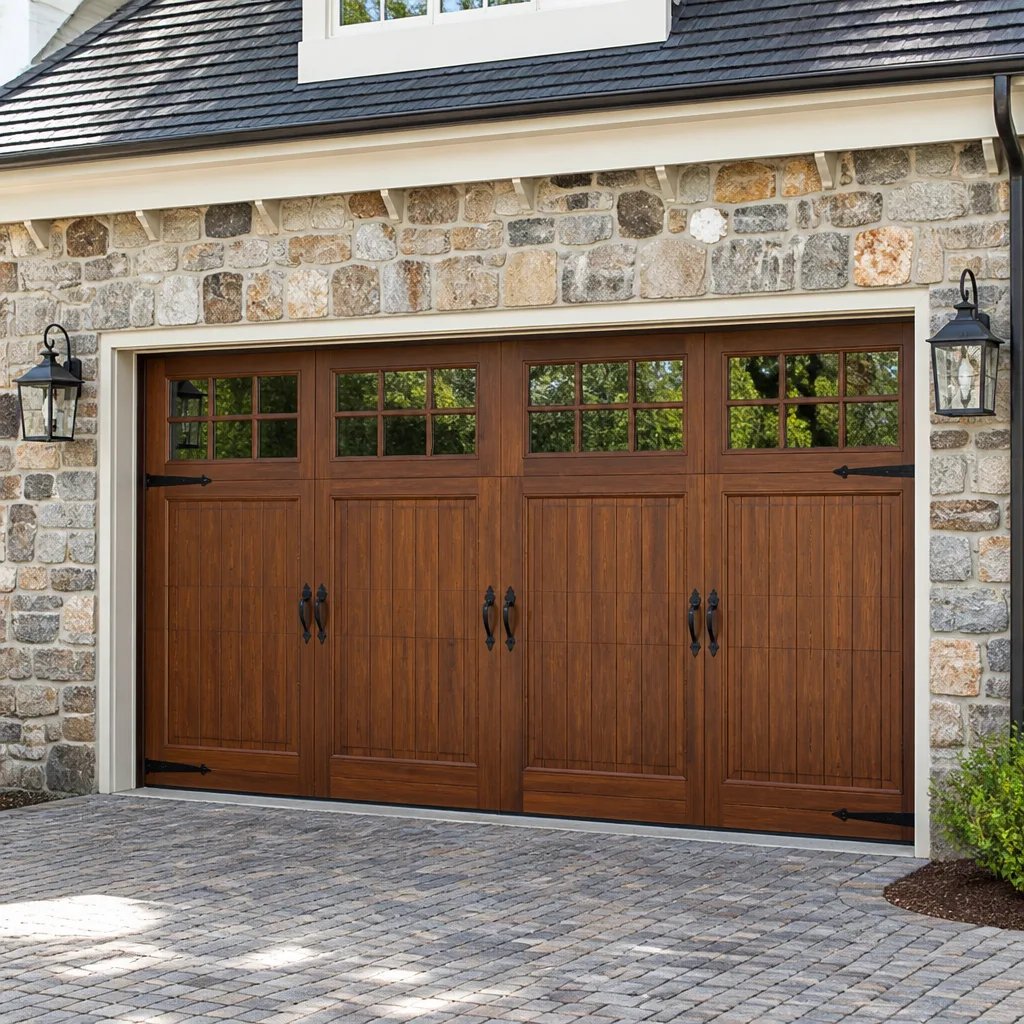 Carriage house
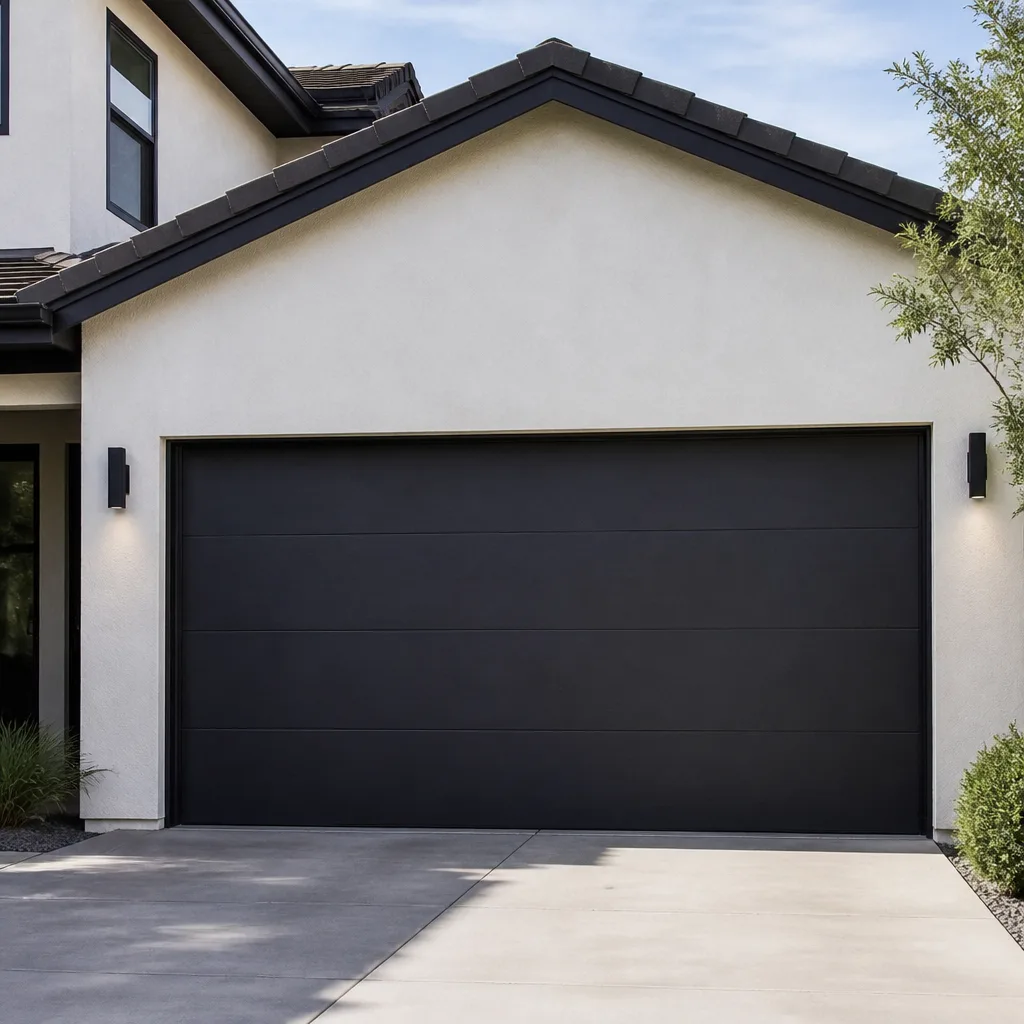 Modern flush
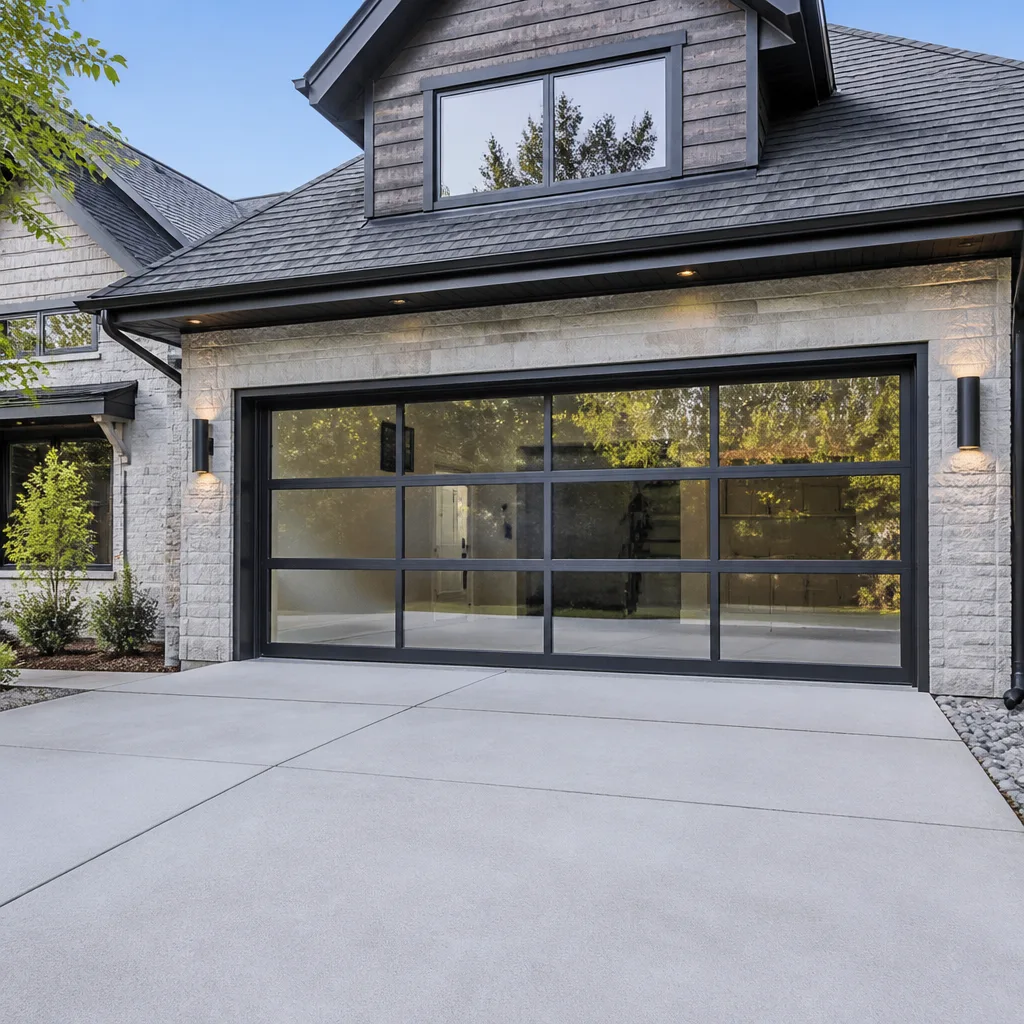 Full-view glass
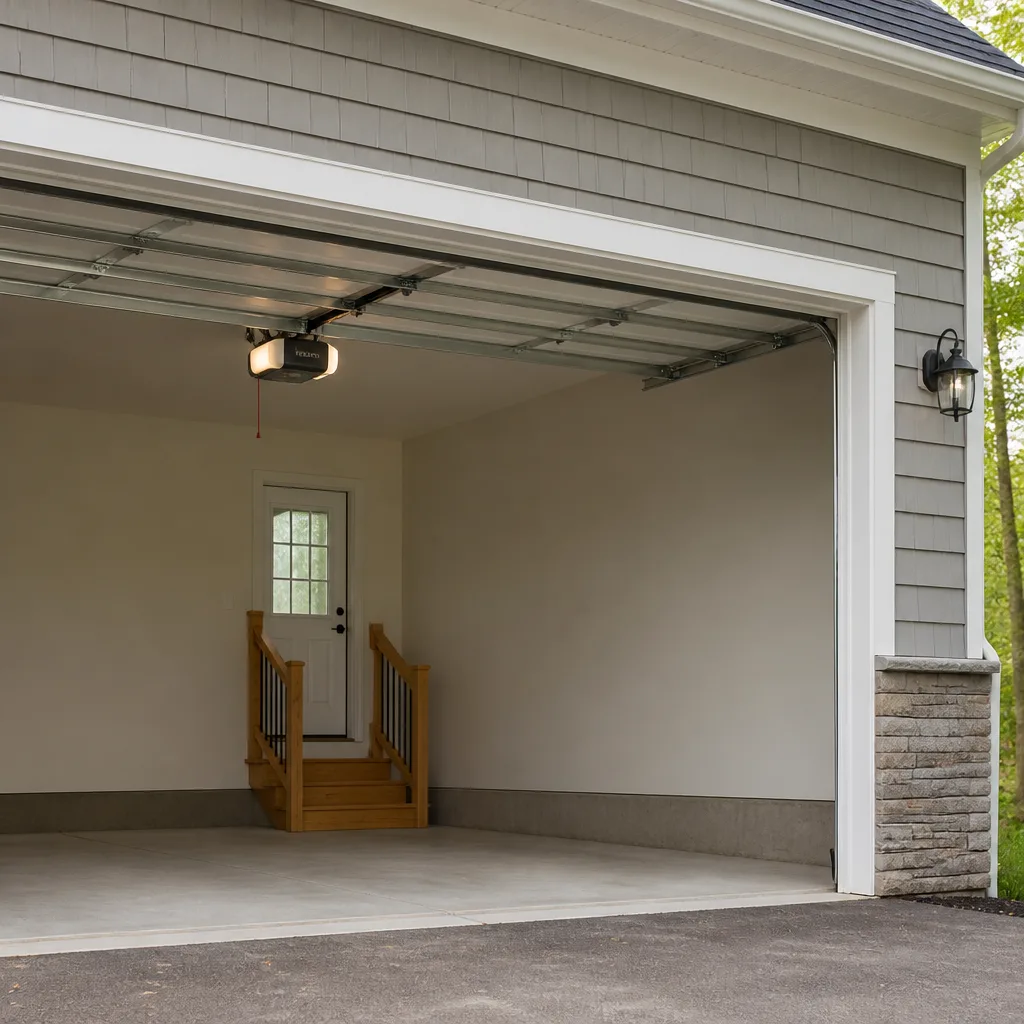 LiftMaster openers
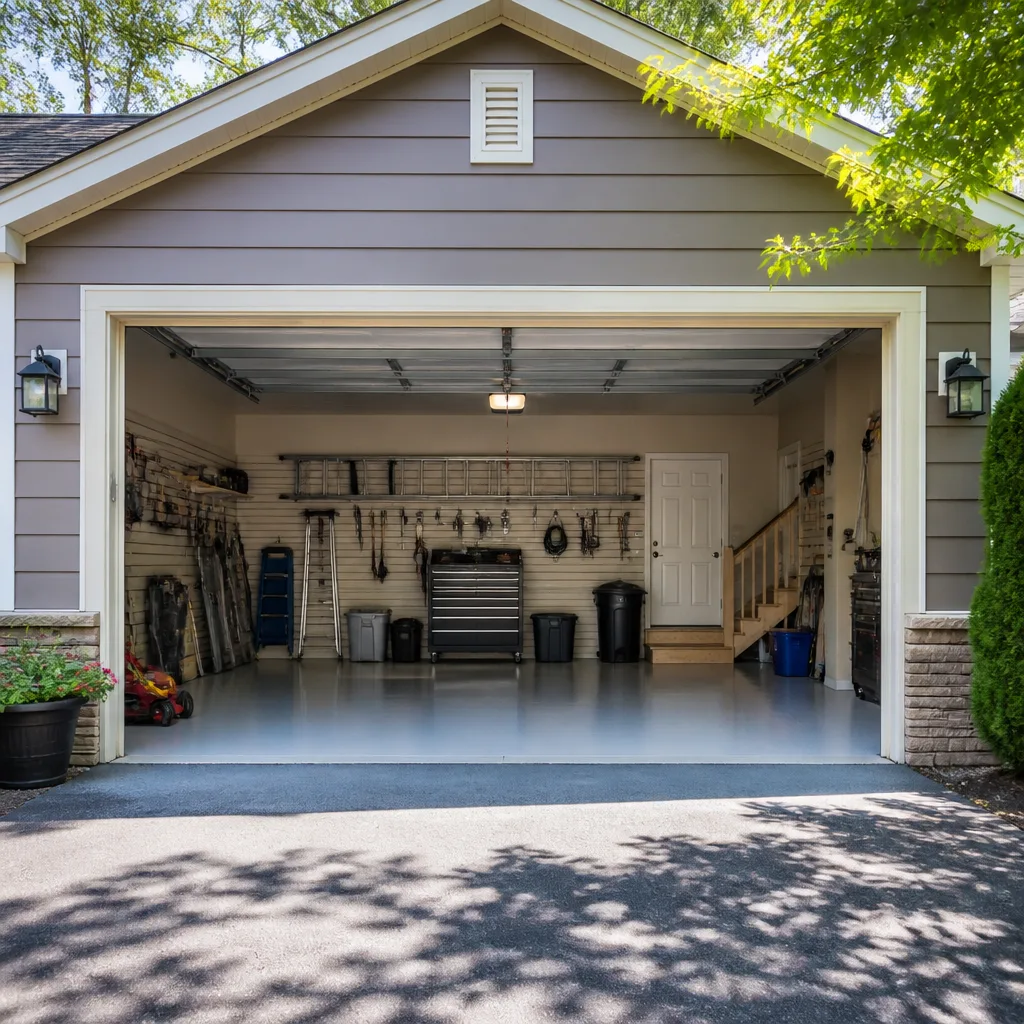 Chamberlain openers
Full 25-point door and opener safety check with every visit - springs, cables, rollers, tracks, and your LiftMaster or Chamberlain opener included
You get a price before we start. It does not change when the pro arrives.
Get your free estimateChoosing the Right Garage Door Brand: A Buyer’s Guide for West Seattle
Most brand comparison guides get the important part wrong. They rank garage doors by warranty length and paint finish, then bury the one detail that actually determines how a door performs over the years: whether the brand has a parts distributor close enough to get a failed component into your hands quickly. A premium door from a brand with no regional distribution can leave you waiting a week on a cable drum failure. A mid-tier door from a brand with stock nearby gets fixed the same visit. For homeowners in West Seattle, that distinction matters more than any finish warranty. This guide explains how to weigh brand, gauge, insulation, and opener compatibility against how doors actually live in this city’s damp, mild climate.
Quick Answer
The right garage door brand for West Seattle is usually a mid-tier product from a manufacturer with strong regional parts distribution, not the most expensive door on the showroom floor. Clopay, Amarr, Wayne Dalton, and Raynor all have solid steel-construction records and reasonable Northwest parts availability; LiftMaster, Chamberlain, Genie, and Craftsman lead on opener compatibility. Choose based on steel gauge (25-gauge for dent-prone homes, 24-gauge for quieter operation), R-value matched to whether your garage is attached, and parts lead time first, warranty second.
Styles & brands we work with
- Raised-panel steel
- Carriage house
- Modern flush
- Full-view glass
- LiftMaster openers
- Chamberlain openers
Table of Contents
- Parts Availability in the Seattle Market
- Steel Gauge: Why 24 vs. 25 Matters
- Insulation and R-Value for West Seattle
- Opener Brand Compatibility
- Where Brand Matters and Where It’s Marketing
- How West Seattle’s Climate Tests a Door
- How to Choose in Seven Steps
- Common Mistakes to Avoid
- When to Call a Professional
- Frequently Asked Questions
Parts Availability in the Seattle Market
Parts availability is the single most underweighted factor in brand selection. When a torsion spring breaks or a hinge corrodes, the question that determines your repair timeline isn’t “how good is the door brand,” it’s “does that brand’s distributor in the Seattle region stock the part.” A brand with a regional warehouse in Pierce or King County gets parts to a technician quickly. A brand with no regional distribution has to order from a national warehouse, adding days to the repair. In West Seattle, where damp air works on every hinge and fastener, that gap between same-visit and next-week repairs gets familiar.
Brands we routinely see with dependable regional distribution in the Pacific Northwest include Clopay, Amarr, Wayne Dalton, and Raynor on the door side, and LiftMaster, Chamberlain, Genie, and Craftsman on the opener side. That doesn’t mean every part for every model is on a shelf within an hour’s drive. It does mean common failure points (springs, cables, hinges, cable drums, rollers, and standard opener boards) are reachable without cross-country shipping. Rare or discontinued panels and rare opener control boards still require special ordering regardless of brand.
- Good regional availability: Clopay, Amarr, Wayne Dalton, Raynor (panels and hardware), LiftMaster, Chamberlain, Genie, Craftsman (openers and accessories).
- Requires order: obsolete opener control boards, custom-width panels, discontinued colors, and specialty glass options, regardless of brand.
- Lead-time risk: brands with no regional distribution go to a national warehouse, which can mean days to a week before a repair can be scheduled.
- Parts stock on hand: the technicians we connect you with stock common components, so many repairs land on the same visit or the next one.
Steel Gauge: Why 24 vs. 25 Matters
Steel gauge is where brand marketing gets thickest. A 24-gauge steel door has thicker steel than a 25-gauge door. That’s the whole story. Lower gauge number means thicker metal, which means better dent resistance and a door that feels more solid. It also weighs more, which matters because a heavier door needs a stronger spring system and is harder on the opener. In a West Seattle climate where doors open and close daily through damp months, that extra weight also stresses hinges and rollers a bit more.
Here’s the practical math homeowners don’t usually see: the difference between a 25-gauge and 24-gauge door from an identical model line is often only a few hundred dollars on the install. That’s real but modest. In return, you get a door that shrugs off the kind of incidental impacts that happen in busy driveways. For homes along the Genesee or Alaska Junction side streets where driveways are tight and kids play basketball, 24-gauge earns its keep. For a detached, low-traffic garage behind a West Seattle cottage, 25-gauge is fine.
- 25-gauge: lighter, cheaper, easier on the opener, dents more easily from bike handlebars, cart bumps, and hail (uncommon here but not impossible).
- 24-gauge: thicker steel, better dent resistance, slightly heavier door, needs proper spring sizing, better long-term appearance.
- 22-gauge or heavier: premium construction, worth considering on a wide double door or a very exposed location.
Insulation and R-Value for West Seattle
Insulation matters in West Seattle, but not in the way a Utah or Minnesota sales pitch implies. West Seattle winters are mild. You aren’t fighting sub-zero, you’re fighting dampness and constant mild chill. So the R-value you actually need depends entirely on whether the garage is attached to living space or detached.
Attached garage: the door is effectively a wall of your house. Any R-value you add keeps conditioned air inside and reduces moisture migration. An insulated door in the R-9 to R-12 range is a real improvement over an uninsulated steel panel, which is essentially R-1. If the room above or beside the garage feels cold in winter, insulation on the door pays for itself in comfort long before it pays for itself in energy bills.
Detached garage: insulation mostly limits temperature swings that cause condensation on tools and stored items. R-6 is often enough to knock down condensation. Going to a high R-value on a detached West Seattle garage usually doesn’t justify the price unless the space is used as a workshop or studio year-round. In this climate, the money is better spent on a door closer to the weather seal where air actually leaks, rather than chasing R-value at the wall.
- Uninsulated steel: roughly R-1, condensation common, temperature swings inside the garage.
- R-6 to R-9 insulated: good fit for detached garages, cuts condensation significantly.
- R-9 to R-12 insulated: solid target for attached garages, worth the upgrade in comfort.
- R-12 and higher: usually overkill for West Seattle unless the garage borders a heated room or the door is unusually exposed.
Opener Brand Compatibility
Openers are where brand loyalty quietly locks you in. Most modern door brands work with any opener because they’re purely mechanical: the door has a torsion bar and a torsion spring that an opener lifts via a standardized operator arm. But some door brands bundle proprietary sealed opener systems, and some manufacturers’ newer doors pair more cleanly with specific smart-home ecosystems. If you buy a door with a proprietary opener interface, you inherit a future replacement headache.
The safer path for West Seattle homeowners: choose the door on steel and insulation, then choose the opener based on lift capacity and compatibility. LiftMaster, Chamberlain, Genie, and Craftsman openers cover most residential doors on the market, and their parts are regionally available. If your home already has a LiftMaster opener and you’re replacing the door, the opener probably stays. If your home has a Craftsman opener from twenty years ago and the door is being replaced, that opener is likely the next thing to fail, and it’s worth considering its future now.
- Check the door’s opener requirement: ask the seller whether the door has a proprietary operator or standard operator-arm mounting.
- Match lift capacity: a heavier door needs a stronger opener; 24-gauge and insulated doors need higher capacity than 25-gauge uninsulated.
- Confirm smart-home protocol: if you want Wi-Fi and app control, verify the opener supports your home’s ecosystem.
- Verify regional parts: LiftMaster, Chamberlain, Genie, and Craftsman lead here.
- Plan for future replacement: standard mounting means you can change openers independently in the future.
Where Brand Matters and Where It’s Marketing
Brand matters most on panel construction, hinge and roller hardware quality, and finish durability. A brand’s steel roll-forming tolerances vary, and tolerances affect how panels sit together, how wind leaks past the seals, and how long the door’s finish holds. In a damp climate, panel finish quality matters more than in a dry climate because moisture wicks along seams. Clopay and Amarr have good reputations here. Wayne Dalton and Raynor hold up as well on mid-tier lines.
Where brand matters least: smart-home integration on the door itself. Door brands have rushed to add app connectivity features that mostly duplicate what an opener already does. If a $300 upcharge buys you a brand’s proprietary door sensor app that fails to sync with your existing smart-home system, you’ve paid for marketing. Decide on the door by steel, insulation, and hardware. Let the opener handle connectivity. The technicians here care about which parts are realistically gettable and which will hold up. That framing works better than any brand brochure.
- Worth paying for: heavier steel gauge, higher-quality torsion hardware, mid-tier or premium insulation, durable finish system.
- Worth comparing: warranty length for panels versus hardware versus finish (hardware warranties often vary widely across the same line).
- Mostly marketing: proprietary app ecosystems on the door, decorative overlays that don’t affect performance, “smart door” features that an opener handles better.
- Weigh carefully: extended paint warranties that depend on annual maintenance you’ll need to have documented.
How West Seattle’s Climate Tests a Door
West Seattle’s dampness is the quiet factor in every door purchase. The neighborhood sits between Puget Sound to the west and the Duwamish to the east, and it sees months of steady drizzle and cool air rather than snow and extreme cold. That environment punishes doors differently than a dry climate does.
Paint and finish last shorter than a manufacturer’s national warranty implies because the surface stays wet longer. Hinges and rollers corrode at a faster rate. Rubber weather seals take on moisture and lose elasticity faster. Torsion spring systems work hardest in the mild, humid months when the door is opening and closing the most times per day. A garage door repair on Admiral or Alki happens most often for spring or hardware reasons, less often for panel damage. A door brand that stands up in West Seattle usually has a strong finish system and premium hinges; a budget door without those traits fails earlier here than it would in a drier city.
- Watch: finish quality on lower-tier lines, hinge and roller finish, spring finish quality, weather seal durability.
- Expect: spring life shorter than western US averages, more frequent hardware checks.
- Consider: a door with stainless steel or coated hardware if the door faces the prevailing weather side.
How to Choose in Seven Steps
- Start with the existing opener. If the house has a LiftMaster or Chamberlain unit already installed, choosing a compatible door keeps that opener in service and saves a replacement cost.
- Measure the opening, not the door. Panel order sizing is a real cost factor; custom-width means extra weeks of lead time.
- Set steel gauge by traffic. 25-gauge for a low-traffic detached garage, 24-gauge for a family’s working door near schools or busy driveways in West Seattle.
- Match R-value to attached versus detached. Insulated upgrades pay off attached; they’re usually optional detached.
- Confirm parts availability. Ask the selling company whether the brand’s parts are stocked in the Seattle market and how long a standard spring or hinge would take.
- Confirm finish warranty terms. Read the actual warranty language, not the summary in the brochure.
- Get the estimate in writing. The written quote should specify brand, model line, gauge, R-value, opener compatibility, and the parts lead times.
See the difference
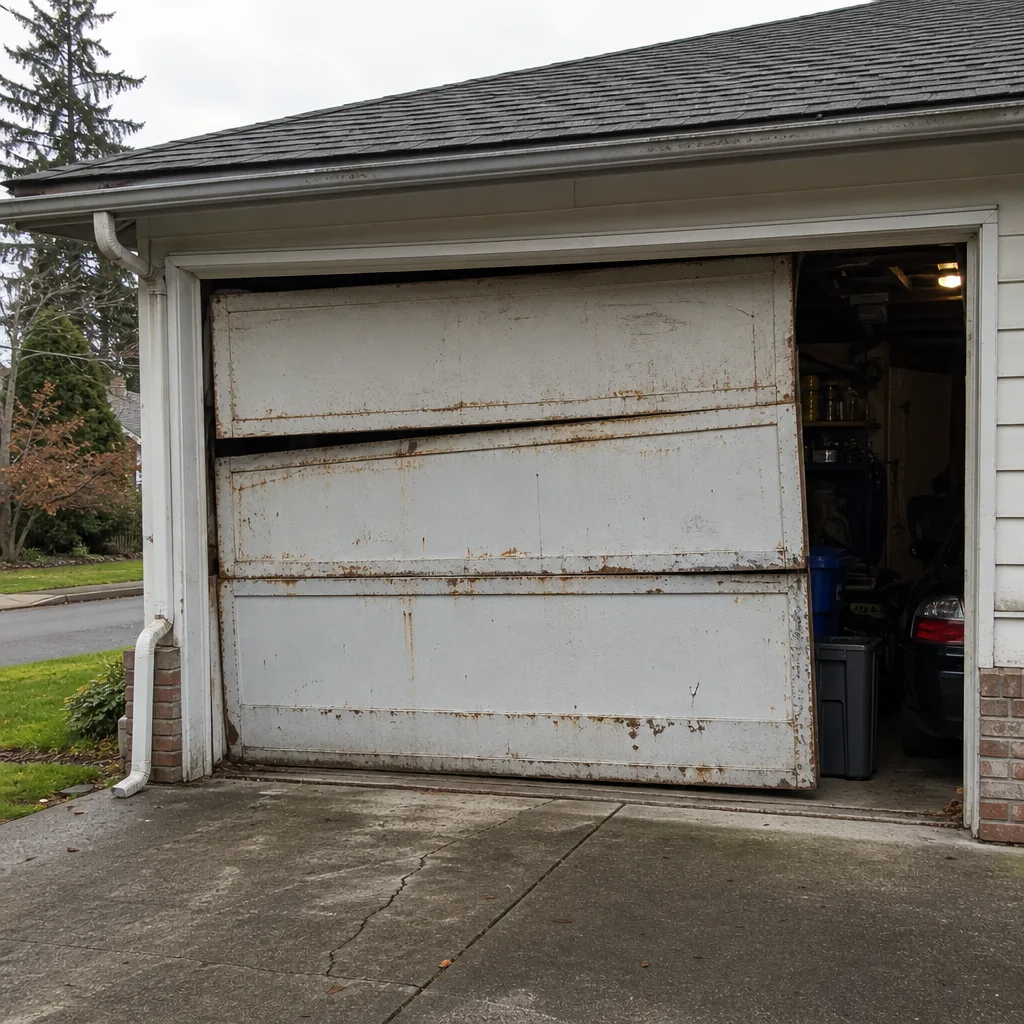 Before
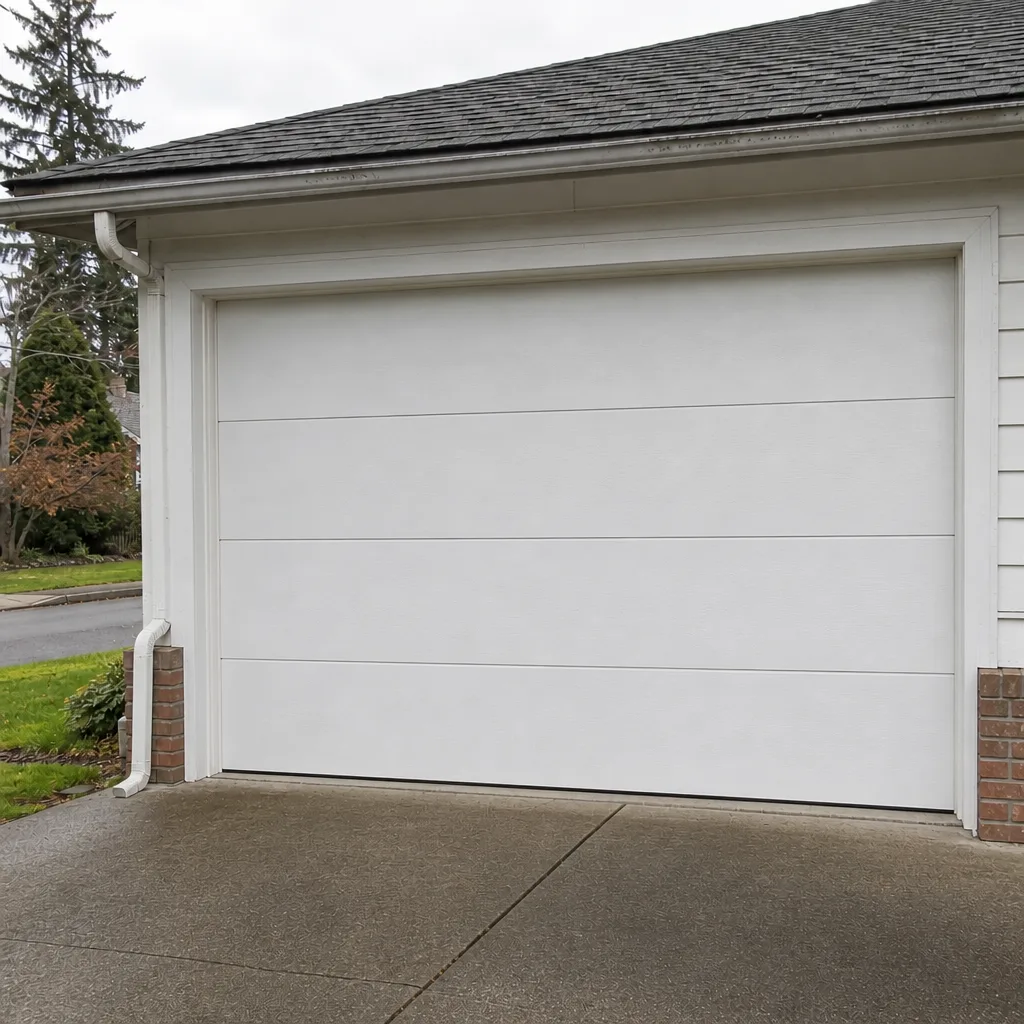 After
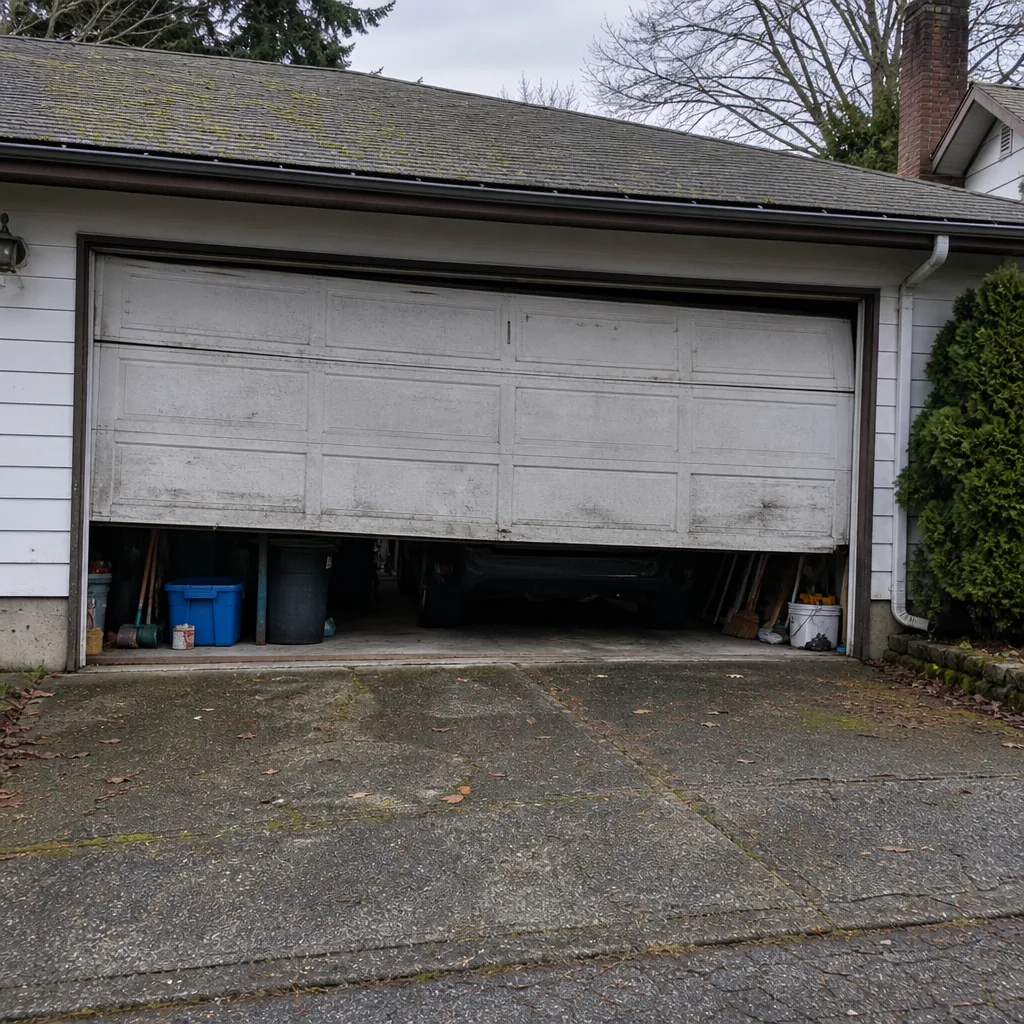 Before
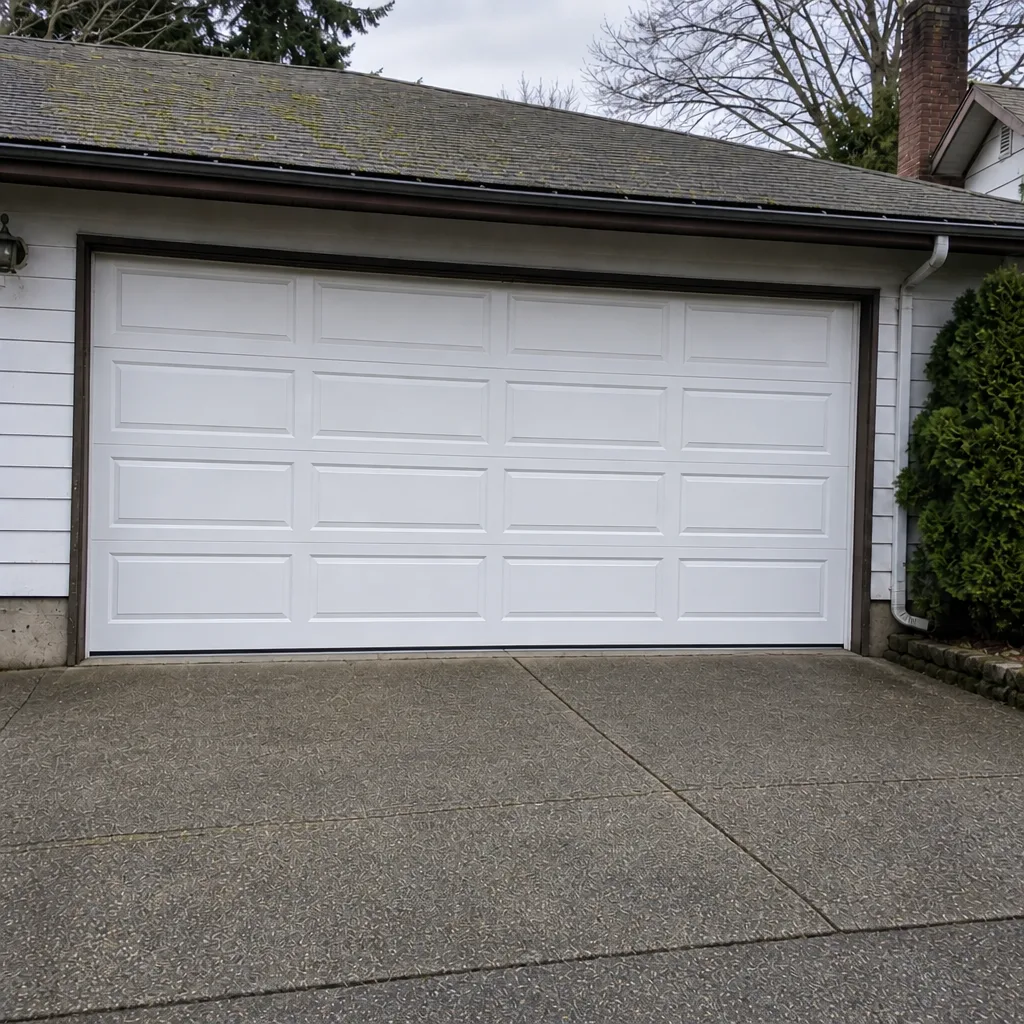 After
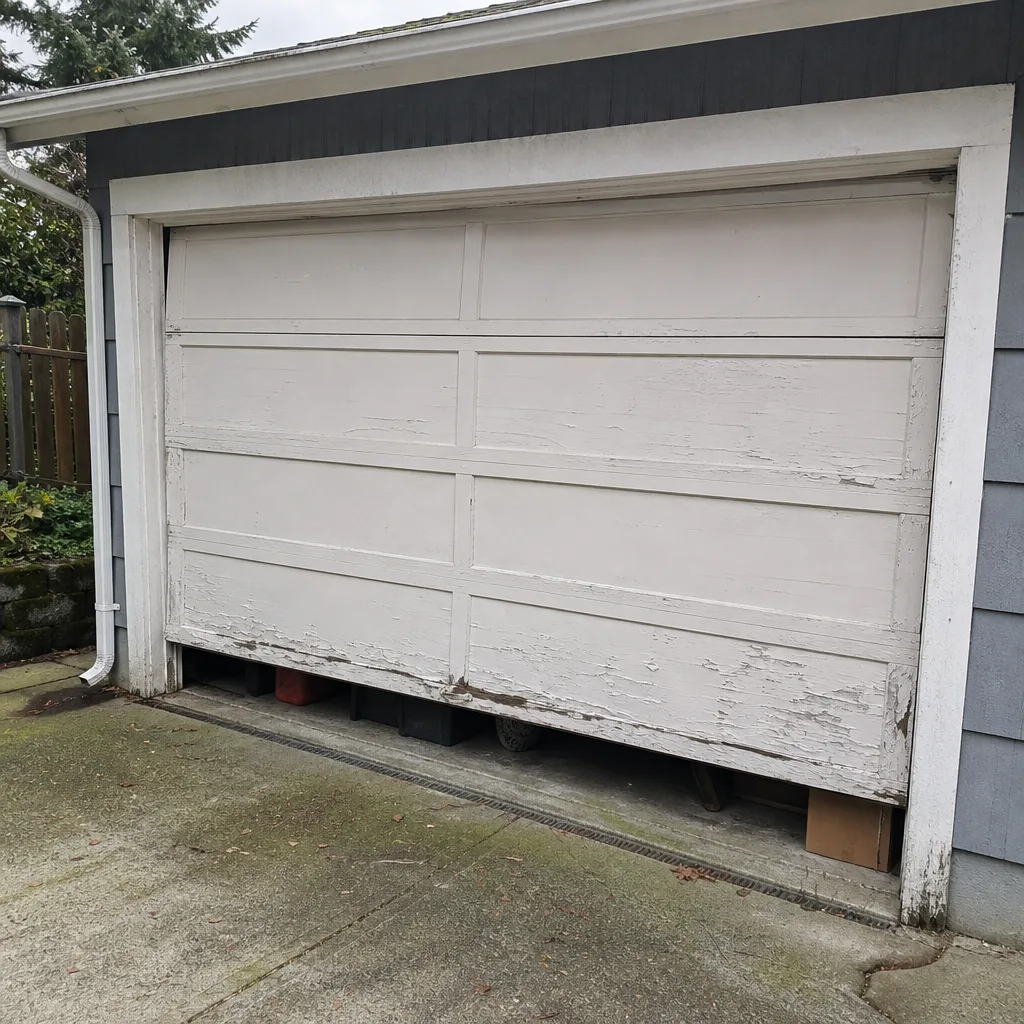 Before
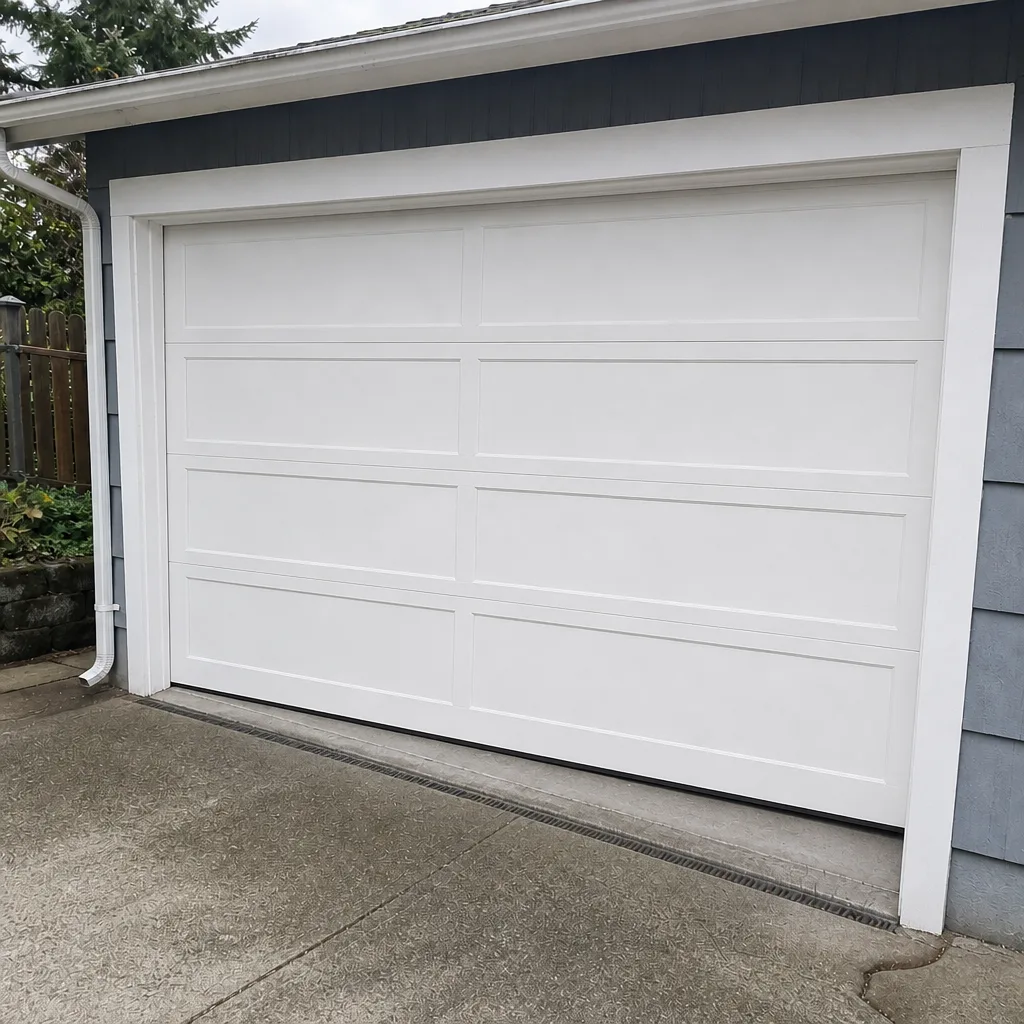 After
Common Mistakes to Avoid
- Choosing brand first and parts availability last. Every year we see doors specified without checking whether the brand’s distributors in the Seattle market stock the parts. A two-day repair turns into two weeks.
- Paying for R-12 on a detached garage. In West Seattle’s climate, an attached garage earns insulation upgrades; a detached shed-garage usually doesn’t.
- Associating brand with gauge. Two models from the same brand can differ in steel gauge. Look at the actual specification, not the logo.
- Locking in a proprietary opener unintentionally. Some door lines restrict which openers can be installed. Ask the question during the estimate, not after the door is hung.
- Buying a premium door for the smart-home feature. The opener handles connectivity far better than any door-mounted sensor app.
- Over-trusting the paint warranty. In this damp climate, finish durability depends on how often the door is cleaned and sealed. A longer warranty means more upkeep, not less.
- Skipping the weather seal. A door can be a bargain until the seal is missing or undersized. West Seattle dampness finds leaks that a dry climate wouldn’t.
When to Call a Professional
Brand selection is a decision you can do at the kitchen table. The work underneath it (spring sizing, opener diagnosis, panel replacement, and full installation) needs a trained technician. Torsion springs are under extreme tension. A wrong spring on a heavier 24-gauge door can injure the person adjusting it and damage the opener. Opener board failures on LiftMaster, Chamberlain, Genie, or Craftsman units need a tech who has opened that model before, not a generalist. Panel replacement on Amarr, Wayne Dalton, or Clopay lines requires correct panel sizing and stock availability, which usually means coordinating with the same company that would spec the original door. Garage Door Repair West Seattle offers free estimates in West Seattle; call (866) 937-8026.
Frequently Asked Questions
Clopay, Amarr, Wayne Dalton, and Raynor all make solid mid-tier steel doors with regional parts availability in the Seattle market. LiftMaster and Chamberlain are the strongest opener choices for compatibility. The right brand for your home depends more on steel gauge and opener compatibility than on the brand’s national ranking.
Prices vary by size, gauge, insulation, and opener requirements, which is why the exact figure comes from a written estimate rather than a website. As a rule, upgrading from 25-gauge to 24-gauge adds a modest amount, and insulation upgrades add more. The written estimate is the price, agreed before work starts; call (866) 937-8026 for a free estimate.
Usually yes, if the opener has enough lift capacity for the new door’s weight. A heavier 24-gauge or insulated door may need a higher-capacity opener, so have the technician check the capacity against the new door’s weight before installation.
Most cities require a permit for structural changes but not for a like-for-like door swap. Ask the City of Seattle’s building department to confirm for your address. The installing technician can usually advise based on the door’s weight and header changes.
We’re factory-familiar with eight major brands: LiftMaster, Chamberlain, Genie, Clopay, Amarr, Wayne Dalton, Craftsman, and Raynor. Our technicians have up to 13 years of experience and can diagnose, repair, or replace systems from any of these brands regardless of which one we recommend for a new door. For opener-specific work, the same team handles garage door opener repair across all of these lines.
A standard single-door replacement usually happens within a day once the door is on site. The bigger variable is door lead time, which can stretch to several weeks for custom-size or special-order panels. Ordering through a company with regional parts availability keeps that timeline shorter.
The Bottom Line
Brand matters more than salespeople admit and less than brand marketing suggests. For West Seattle homeowners, the right door usually comes from a mid-tier line (Clopay, Amarr, Wayne Dalton, or Raynor) with regional parts distribution, paired with a compatible LiftMaster, Chamberlain, Genie, or Craftsman opener. Steel gauge should follow driveway traffic, insulation should follow attached versus detached, and smart-home features should follow the opener, not the door. Get an estimate in writing that specifies brand, model, gauge, R-value, and opener compatibility, and let the written quote be the price you actually agree to. If a door from a premium brand can’t get a part into the Seattle market quickly, that premium is difficult to justify.
If you’re weighing a replacement, a repair, or just a brand decision, the same team handles everything end to end. Full garage door installation is scheduled around a free measure and a written price. Repairs and spring work move faster when it’s urgent. Reach us at (866) 937-8026 for a free estimate, and wherever you start with us, we’ll show up on time, diagnose accurately, and quote the price before any work begins. From installation to repair to individual parts, one call handles it. For a full menu of what we handle across Garage Door Repair West Seattle, and for smaller fixes like a creaky hinge or a failing seal, garage door repair covers the small jobs as well as the big ones.
Written by the team at Garage Door Repair West Seattle.