Last updated November 23, 2026
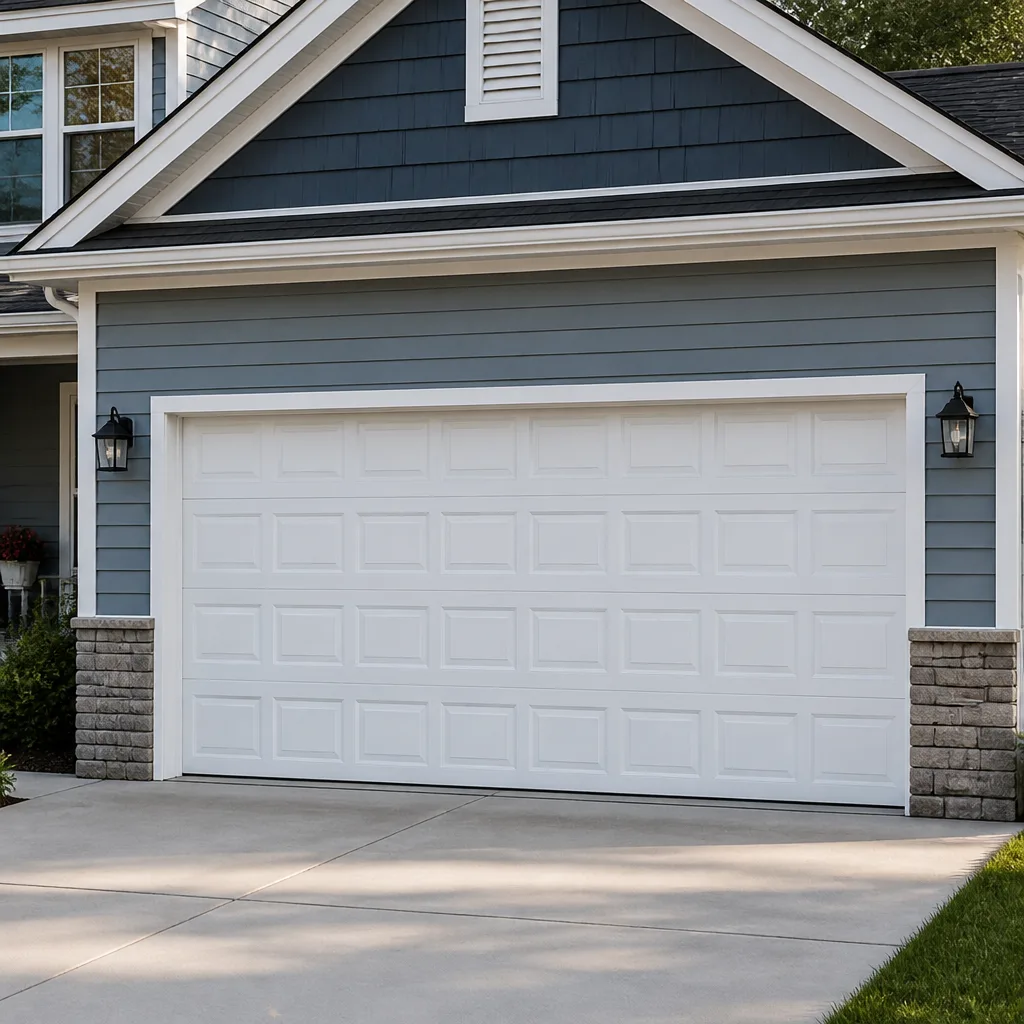 Raised-panel steel
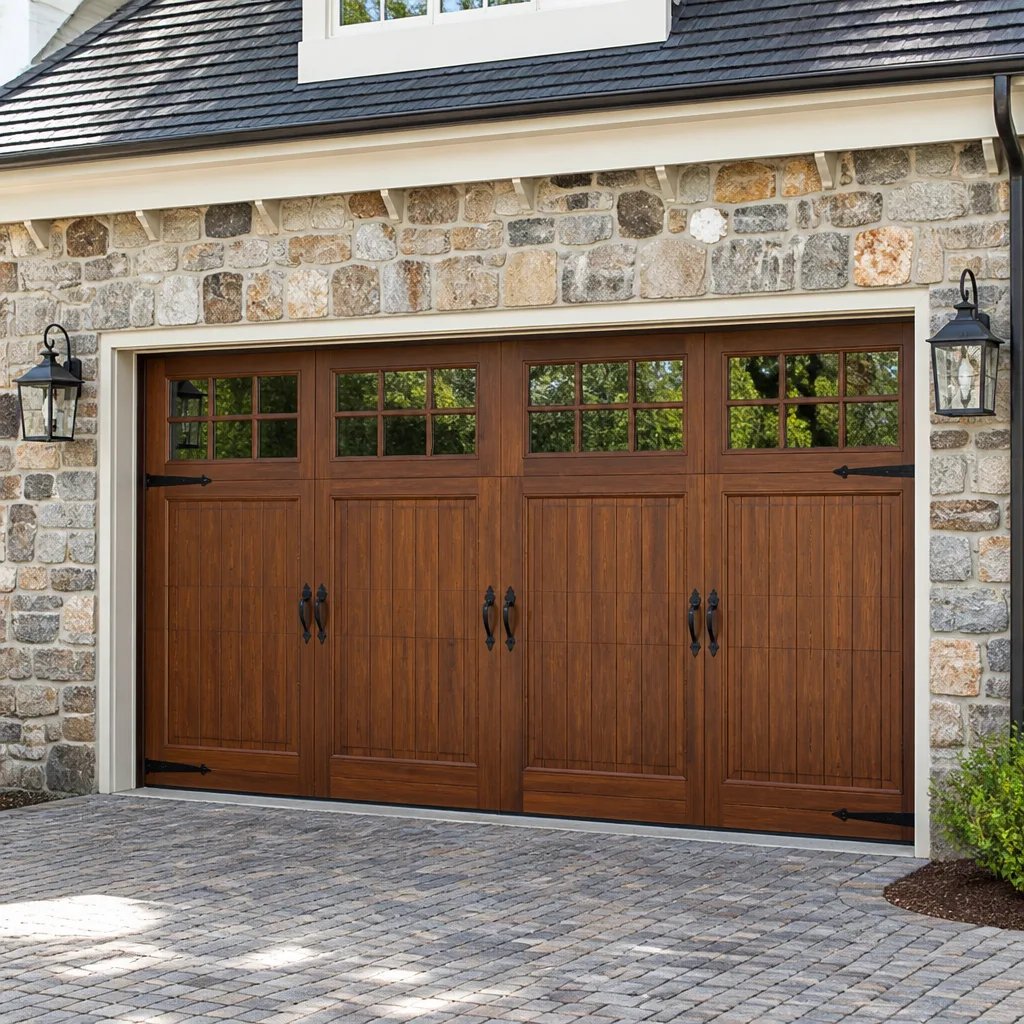 Carriage house
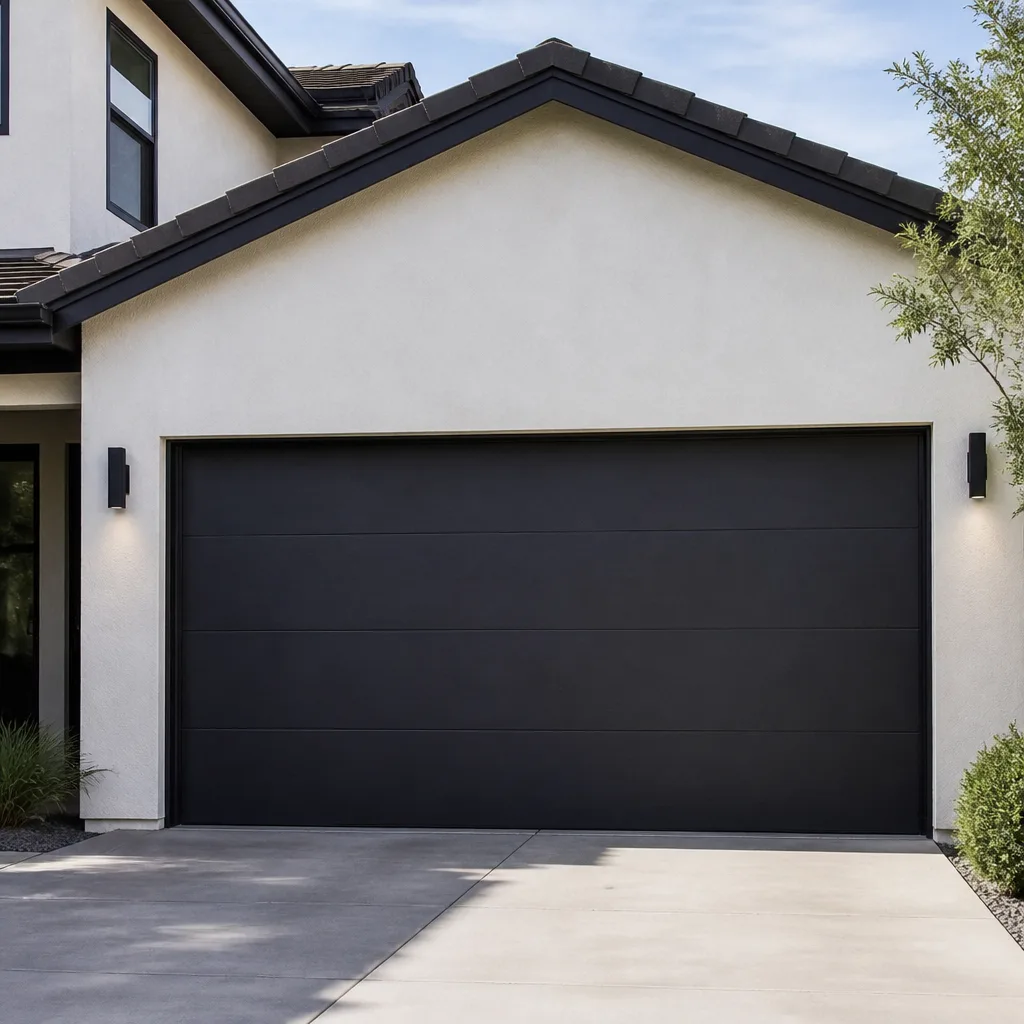 Modern flush
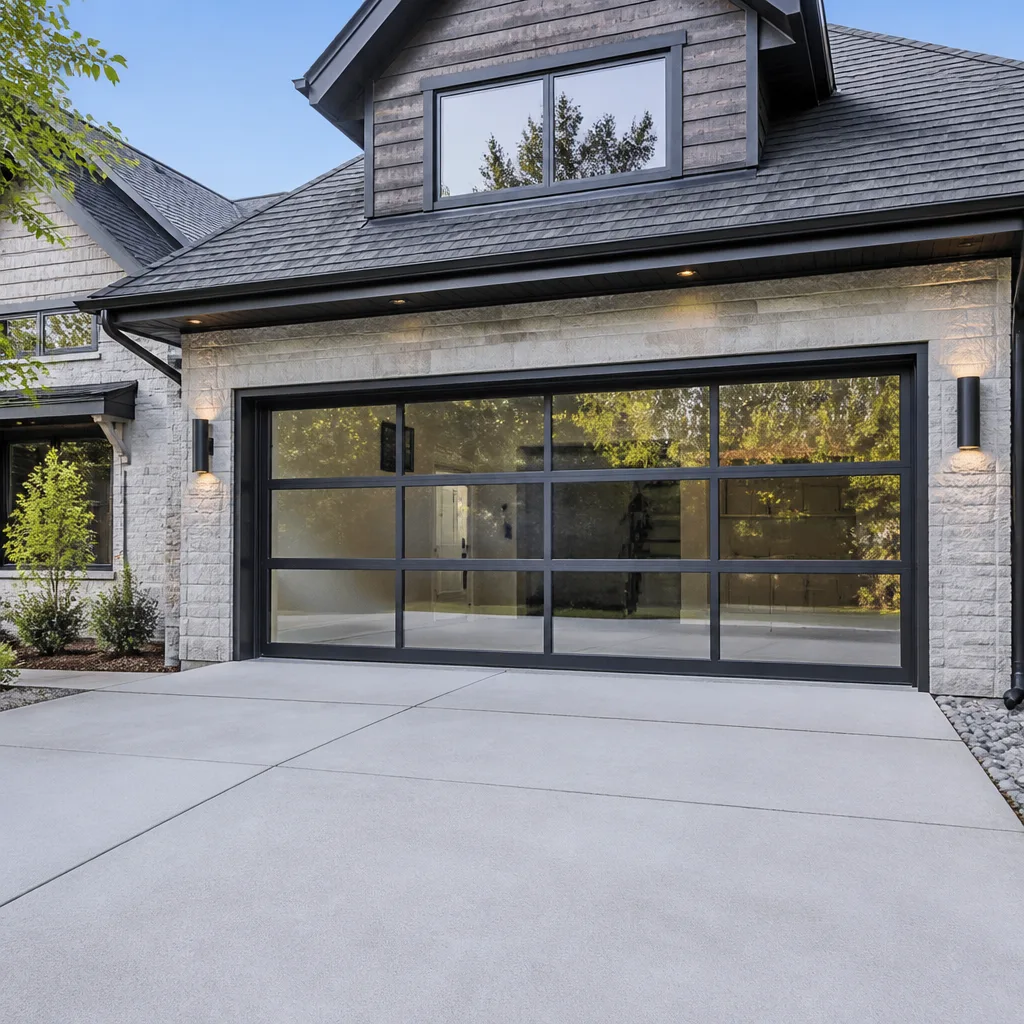 Full-view glass
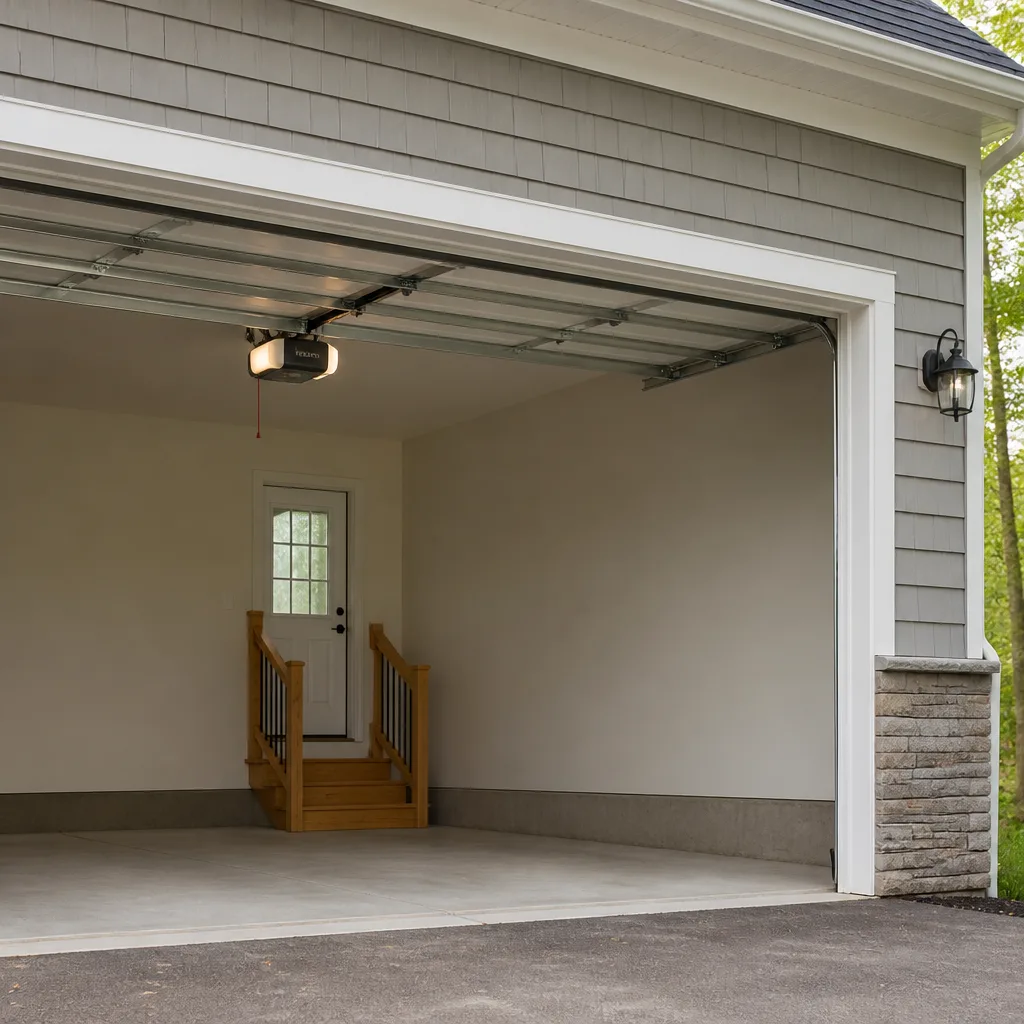 LiftMaster openers
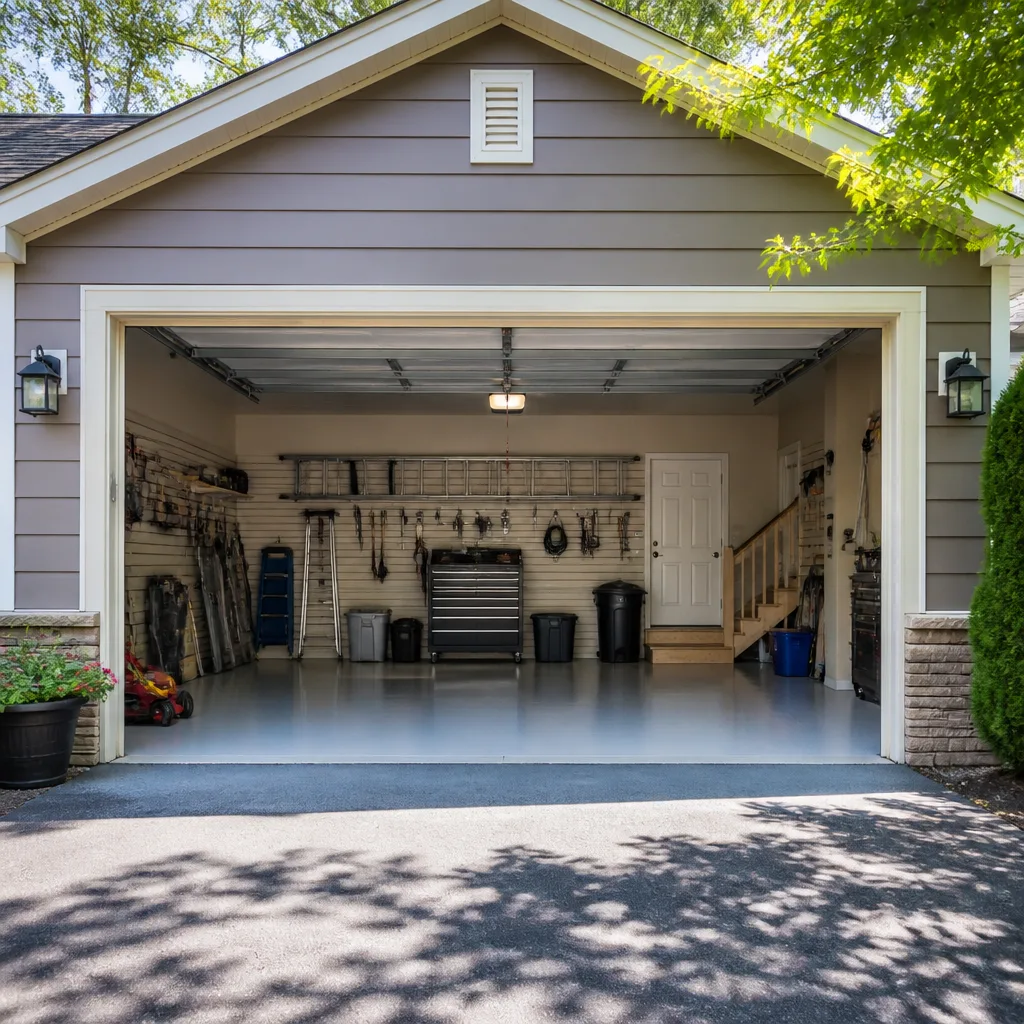 Chamberlain openers
Full 25-point door and opener safety check with every visit - springs, cables, rollers, tracks, and your LiftMaster or Chamberlain opener included
You get a price before we start. It does not change when the pro arrives.
Get your free estimateSeasonal Garage Door Care for West Seattle: Year-Round Homeowner’s Guide
Most garage door advice you’ll find online assumes a place with four dramatic seasons. West Seattle doesn’t work that way. Our winters rarely involve snow loads, and our summers rarely spike the thermometer. What we do have is roughly six months of relentless moisture cycling through metal tracks, wood panels, hinges, and rubber seals, followed by a dry stretch that quietly shrinks every seal and stresses every panel facing south. That rhythm, not blizzards or heat waves, is what wears garage doors out in West Seattle. This guide walks you through a seasonal reset that actually matches the climate here, so you’re inspecting and adjusting on a schedule instead of waiting for a spring to snap or an opener to fail on a morning you need to leave.
Quick Answer
Seasonal garage door care in West Seattle comes down to two real seasons: prepare for the wet stretch from November through March with seal, hardware, and track attention in October, then address dryness-driven shrinkage, sun exposure, and spring tension in late spring and summer. Because temperatures here swing moderately rather than dramatically, the biggest risks are moisture intrusion and thermal contraction, not snow or extreme heat. A twice-a-year reset and a quick monthly visual check prevent most of the failures we see.
Styles & brands we work with
- Raised-panel steel
- Carriage house
- Modern flush
- Full-view glass
- LiftMaster openers
- Chamberlain openers
Table of Contents
- Why West Seattle’s Climate Is Harder on Garage Doors Than It Looks
- The October Wet-Season Prep: Your Fall Checklist
- How Cold Weather and Contraction Affect Spring Tension
- Summer Tasks West Seattle Homeowners Skip
- Bottom Seals and Weatherstripping for Horizontal Rain
- Opener Sensitivity and Force Settings by Season
- Your Year-Round Monthly Five-Minute Check
- Brand Fluency and Why Parts Availability Shortens Downtime
Why West Seattle’s Climate Is Harder on Garage Doors Than It Looks
West Seattle sits in a maritime climate that moderates temperatures but delivers moisture in volume. Rain here doesn’t always fall straight down. During wind events it drives sideways into the door face, under the bottom seal, and around the perimeter trim. That horizontal rain is the detail that separates real garage door care here from generic national advice. Over a fall and winter, water finds every gap in the weatherstripping and every soft spot in a wood bottom section.
Contraction matters just as much. The metal tracks, hinges, and torsion system move slightly with temperature swings that most of the country would call mild. That’s fine over a week. Over a season, repeated expansion and contraction loosens fasteners, moves track alignment fractions of an inch, and changes how much tension the springs are actually carrying. A door that balanced perfectly in August can feel noticeably different by December, even without a single part failing outright.
Housing stock across neighborhoods like Fauntleroy, Gatewood, and Alaska Junction adds another layer. Older homes often have heavier wood doors and older hardware; newer construction tends toward insulated steel panels and modern openers with force sensors. Each needs slightly different seasonal attention. We work on the door that’s actually on your home, whether that’s a Clopay steel door with a LiftMaster opener or something two decades older.
The takeaway: in West Seattle, seasonal care is really moisture management in the wet half of the year and shrinkage management in the dry half. Everything in this guide follows from that single idea.
The October Wet-Season Prep: Your Fall Checklist
October is the one month where a little work goes the furthest in West Seattle. Get ahead of the rain before the wet stretch from November through March locks in, and you’ll spend far less time dealing with the fallout in January. Here’s the sequence we recommend, and it applies whether you’re comfortable on a ladder or would rather have a technician handle it.
- Inspect and clean the bottom seal. Look for cracks, hardening, or gaps along the full width. A seal that’s stiff and cracked will let driven rain in all winter.
- Check the perimeter weatherstripping. Run a hand along the trim on both sides and the top. Feel for gaps, tears, and spots where the rubber has pulled away from the frame.
- Test the door’s balance with the opener released. Disconnect the opener and lift the door halfway by hand. A properly balanced door stays roughly in place. If it drifts down or feels heavy, the springs need attention from a trained technician, not a homeowner adjustment.
- Tighten visible fasteners and check the hinges. Loose hinge screws and roller brackets are common heading into winter. Snug them, but don’t overtighten into older wood.
- Look at the tracks for debris and alignment. Small leaves, grit, and slight bends can cause binding once the door starts cycling more in wet conditions.
- Clear drainage around the door opening. If water pools against the threshold, no seal holds up for a whole winter.
- Lubricate moving metal parts with a proper garage door lubricant. Rollers, hinges, and the torsion area benefit from a light application heading into the wet months.
If any step turns up a cracked seal, a bent track, or springs that don’t hold the door’s weight, that’s the moment to schedule garage door repair rather than waiting for a failure. Front-loaded repairs in October are almost always simpler than emergency ones in January.
How Cold Weather and Contraction Affect Spring Tension
Here’s the thing most West Seattle homeowners don’t know: your springs don’t “know” it’s summer or winter, but the metal around them does. Torsion and extension springs are calibrated to counterbalance a specific door weight. When the door’s panels, tracks, and hinges contract slightly in cooler temperatures, the whole system’s balance shifts. The door may sit a little differently, run a little slower, or feel heavier as the wet season settles in. A door that balanced fine in summer often needs adjustment by December.
This is exactly where caution matters most. Garage door springs are under extreme tension, and they’re one of the most dangerous components on the whole door. A spring under load can release violently if handled incorrectly, and the tools and technique required are not the kind of thing a homeowner should improvise. We say this plainly: spring adjustment and replacement are work for trained technicians. If your door feels heavy or won’t stay up when you test balance, that’s the cue to call, not to start turning adjustment bolts.
What you can safely do is watch for the signs:
- The door feels noticeably heavier when you lift it by hand.
- The door drifts down on its own from the halfway point.
- You hear a loud pop or see a visible gap in a spring coil.
- The opener strains more than usual to lift the door.
One more temperature detail worth knowing: during the occasional cold snaps that dip West Seattle into the thirties and below, metal contracts enough that a door can sound different, rattle a bit more, or hesitate at the limits of travel. Some of that is normal. If it persists after the cold passes, that’s when a spring inspection belongs on the list. Our technicians have up to 13 years of experience reading exactly these symptoms, and it’s core work for us, not a side job.
Summer Tasks West Seattle Homeowners Skip
The dry season here is gentle compared with most of the country, which is precisely why so many West Seattle homeowners skip summer maintenance entirely. That’s a mistake. Summer brings two forces that quietly do damage over July and August: seal shrinkage and sun exposure.
Rubber and vinyl seals that swelled slightly in the wet season dry out and shrink in the warm, dry air. That means the gap at the bottom of your door can widen without the door moving at all. You won’t notice from the driver’s seat, but a slightly larger gap is a direct invitation for insects, drafts, and the first rain of autumn. A fifteen-second visual check of the bottom seal on a dry afternoon tells you whether it’s time for replacement.
Sun angle matters too, especially on south- and west-facing doors. UV exposure over years fades painted steel and can make a wood door’s finish chalk and crack. If your door catches a lot of afternoon sun, a light recoat or paint touch-up during the dry months lasts longer than doing it in the rain, and it protects the material underneath.
Two summer tasks to put on your calendar:
- Recheck the bottom seal and perimeter weatherstripping after the dry stretch. If it’s cracked or shrunken, replace it before the wet season returns.
- Inspect sun-facing panels for fading, chalking, or bubbling paint. A Clopay or similar painted steel door benefits from a finish check once a year.
If the seal or panel damage has gone far enough that the door no longer keeps weather out, garage door installation may eventually make more sense than patching. That’s a measured decision with a written price, not something you decide on a rainy morning with a door stuck open.
Bottom Seals and Weatherstripping for Horizontal Rain
In West Seattle, seals aren’t a cosmetic detail. They’re the front line against the sideways rain that arrives with wind events from roughly November through March. A bottom seal that’s curling, stiff, or missing chunks won’t stop driven water, and that water ends up on the garage floor, in the frame, and eventually inside your door’s panels or track hardware. The same goes for the perimeter weatherstripping around the sides and top.
What to check, in plain terms:
- Bottom seal: Press it lightly. It should feel pliable, not hard like a plastic comb. Look for cracks and missing sections along the full length.
- Side and top weatherstripping: Make sure it sits snug against the door when closed. Gaps, tears, or rubber that’s pulled away from the nails are all weak points against horizontal rain.
- Thresholds: Check where the door meets the floor. If you can see daylight under a closed door, the seal has failed.
- Water staining: Dark streaks on the door’s interior or floor near the opening tell you water is already getting in.
Most seals are straightforward parts to replace, and keeping them in good condition is one of the highest-value habits in West Seattle’s wet climate. A worn seal replaced in October protects everything behind it all winter. We stock common bottom seals and weatherstripping components, so a worn seal usually gets handled the same visit rather than waiting on a special order. If you’d rather have it inspected and swapped by someone who does it regularly, call us and we’ll walk through it with you and quote a written price before any work starts. Replacements aren’t urgent work we rush; they’re measured and scheduled.
Opener Sensitivity and Force Settings by Season
Ever noticed your opener acting a little more temperamental in January than it did in August? There’s a mechanical reason. Openers have force and travel-limit settings that were tuned to a door’s weight and range of motion. When cooler temperatures shift the door’s balance and the tracks contract slightly, those settings can no longer match the door. The opener interprets the extra resistance as an obstruction and reverses, or the door fails to hit its limit switch correctly, and you get limit errors or a door that starts to close and then reopens. Your opener’s settings that worked in August may cause limit errors by January.
The fix isn’t to crank the force up and hope for the best. Forcing a door that’s actually out of balance stresses the opener, the springs, and the door itself. The right approach is to have a technician check the balance and then adjust the opener’s force and limit settings to match the door’s real condition. That’s true for modern Wi-Fi and smart-home-connected openers (LiftMaster and Chamberlain among the most common in newer West Seattle homes) as well as older legacy drives like many Genie and Craftsman units on the west side of the city.
Signs your opener needs a seasonal adjustment or repair:
- It reverses before the door touches the floor.
- The door stops short of fully closing or fully opening.
- The opener strains or the motor sounds unusually loud during a cycle.
- The safety sensors are constantly triggered or the door behaves erratically in cold weather.
When the behavior persists after the cold passes, that’s the point to schedule garage door opener repair. Getting the settings right for the season is a small job; leaving a struggling opener fighting an unbalanced door is how motors fail early.
Your Year-Round Monthly Five-Minute Check
You don’t need to do anything dramatic every month. A quick five-minute walkthrough catches most problems long before they turn into a broken spring or a stuck door. Run through these checks once a month and you’ll stay ahead of the seasonal swings:
- Watch and listen to one full open-and-close cycle. Any new noise, hesitation, or shudder is worth noting.
- Check the bottom seal and perimeter weatherstripping by touch. Note any hardening, cracking, or gaps.
- Test the door’s balance by hand with the opener released. If it no longer holds its position, that’s a spring signal.
- Test the safety reversal. Put a suitable object in the door’s path and confirm the door reverses when closing.
- Look at the tracks for debris, loose hardware, or visible bends.
- Wipe or blow out small leaves and grit from the tracks and threshold.
- Confirm the opener’s lights, sensors, and remote are working.
That routine, done consistently across West Seattle’s wet and dry halves, prevents the majority of seasonal surprises. It’s also low effort. The value is in the consistency, not the amount of work.
Brand Fluency and Why Parts Availability Shortens Downtime
When you schedule service, the single biggest factor in how fast a repair finishes is whether the technician already knows your system and can get the right part. That’s why we’re factory-familiar with eight of the most widely installed garage door and opener brands in the country: LiftMaster, Chamberlain, Genie, Clopay, Amarr, Wayne Dalton, Craftsman, and Raynor. We work on your brand, whatever is already on your home, rather than pushing you toward a preferred system. If your door is a Clopay and your opener is a Chamberlain, we diagnose and repair what’s actually installed.
Parts supply is the other half of that. When a component needs replacing, waiting days for an order turns a small job into a longer one. We stock and sell common garage door and opener components, which means a worn seal, a failing roller set, or a common opener part can often be handled the same visit or the next day. That matters most in West Seattle during the wet season, when a door that won’t close is a real problem.
It also matters for scope. From a full new door install to a broken torsion spring to a single hinge or opener component, the same company handles it. You don’t need to coordinate between a door installer, an opener specialist, and a parts supplier to get one problem solved. Learn more about the range of what we do on our Garage Door Repair West Seattle page.
Common Mistakes to Avoid
- Waiting until the door breaks. In West Seattle, the wet stretch from November through March rewards a fall reset. Skipping October means discovering a bad seal in January, when the damage has already happened.
- Adjusting torsion springs without proper training and tools. Springs are under extreme tension. A mistaken adjustment can cause serious injury. Leave both adjustment and replacement to a trained technician.
- Assuming summer needs no maintenance. The dry season is gentle here, but sun angle, UV exposure on south-facing doors, and seal shrinkage still apply. Ignore them and the first fall rain finds the gaps.
- Cranking up the opener’s force to fix a struggling door. Increased force masks an out-of-balance door and stresses the opener. Diagnose the door first, then adjust settings.
- Overlooking horizontal rain when replacing weatherstripping. A seal that looks fine on a calm day can let sideways rain straight in during a wind event. Check for snug contact, not just visible gaps.
- Skipping the monthly visual check. Five minutes a month catches worn seals, loose hardware, and balance problems long before they cause a failure.
- Assuming the cheapest seal is good enough. A stiff, poorly made seal fails within a season in this climate, and you end up replacing it twice.
See the difference
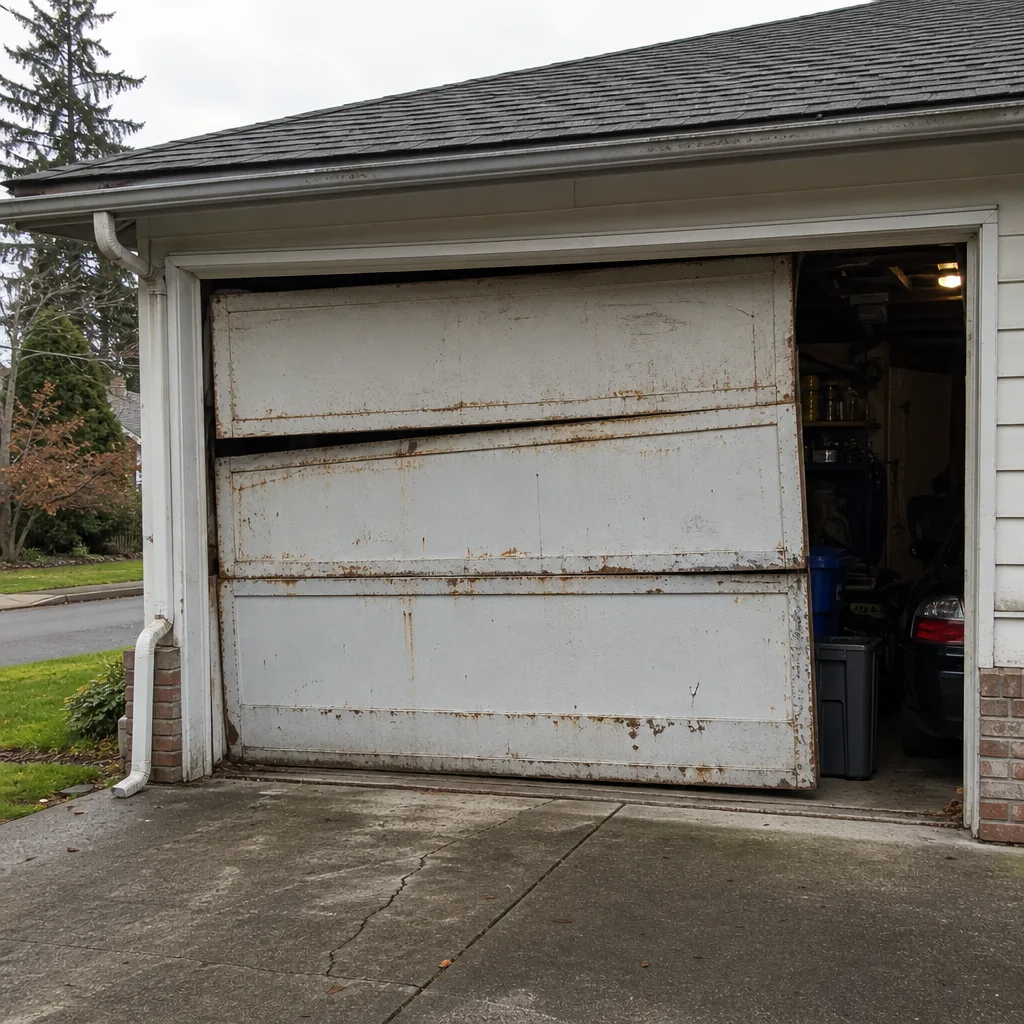 Before
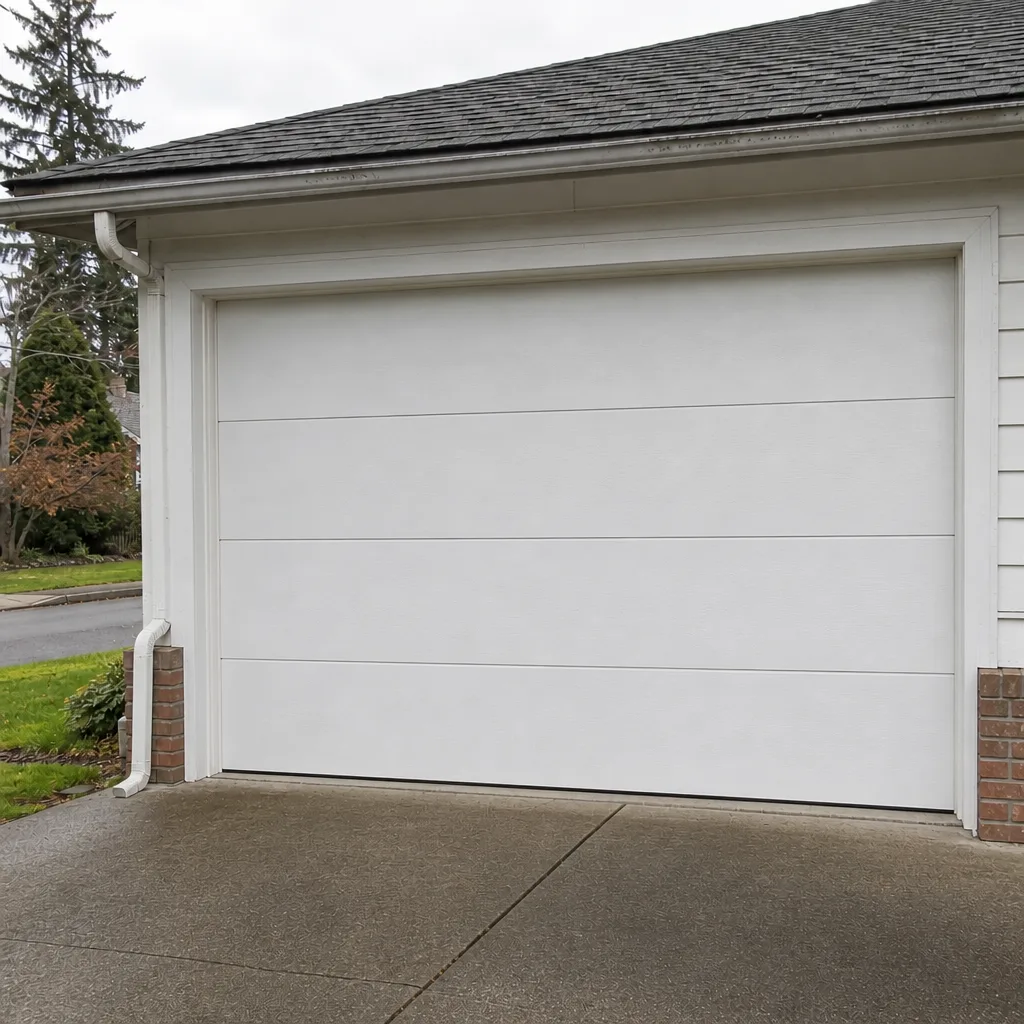 After
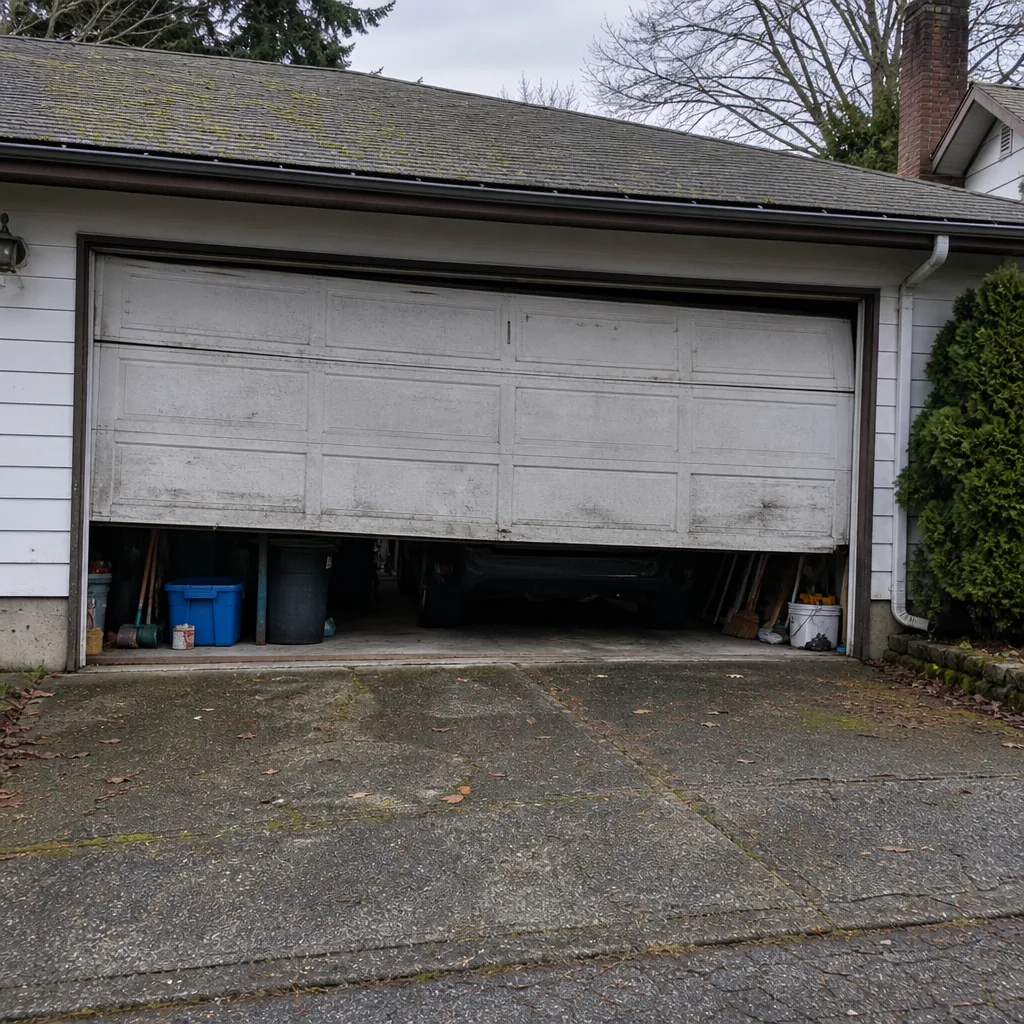 Before
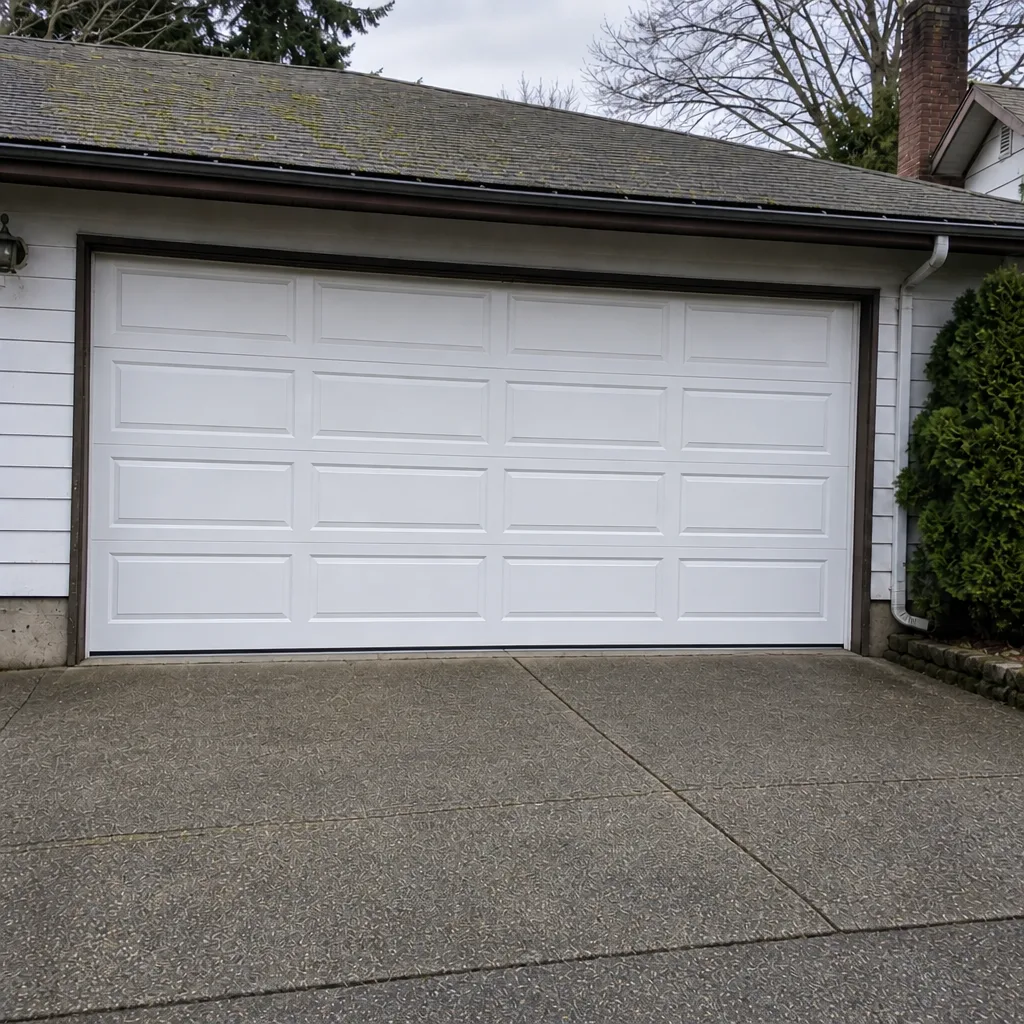 After
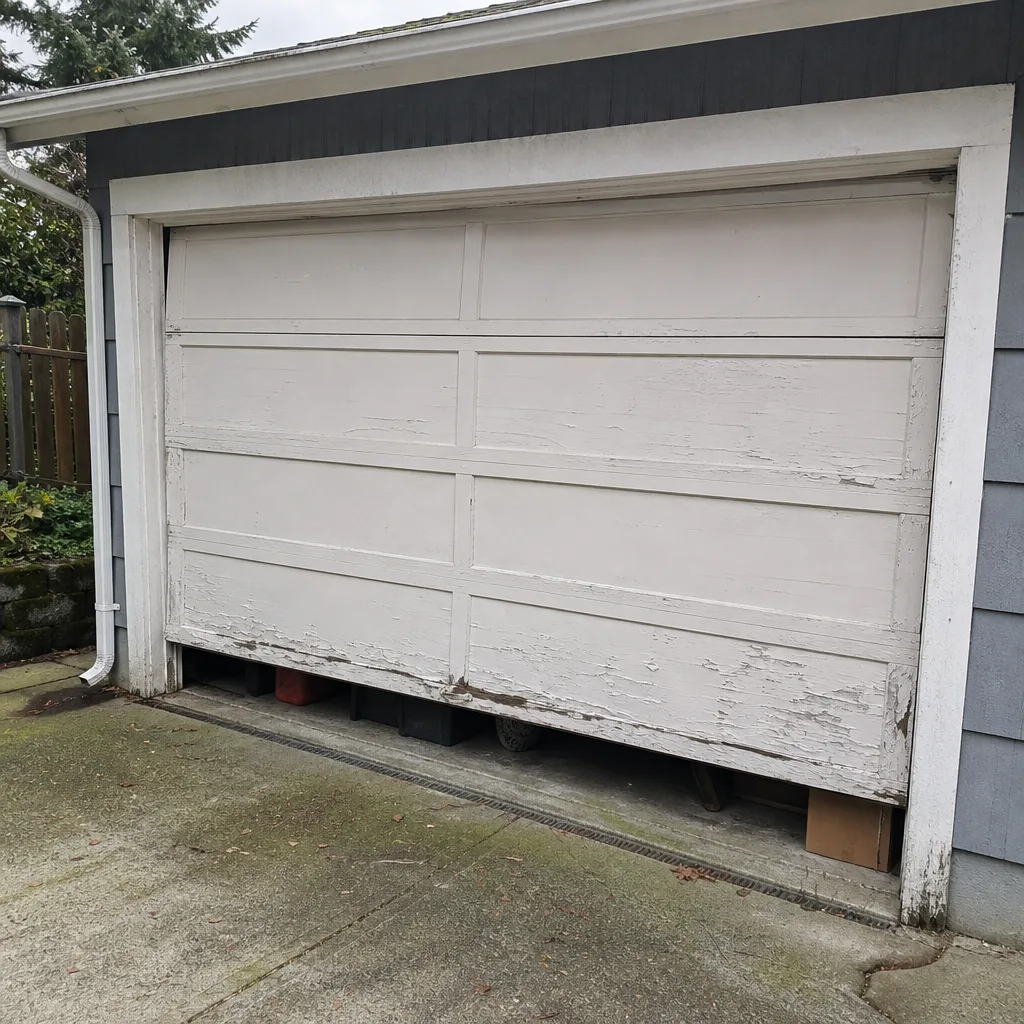 Before
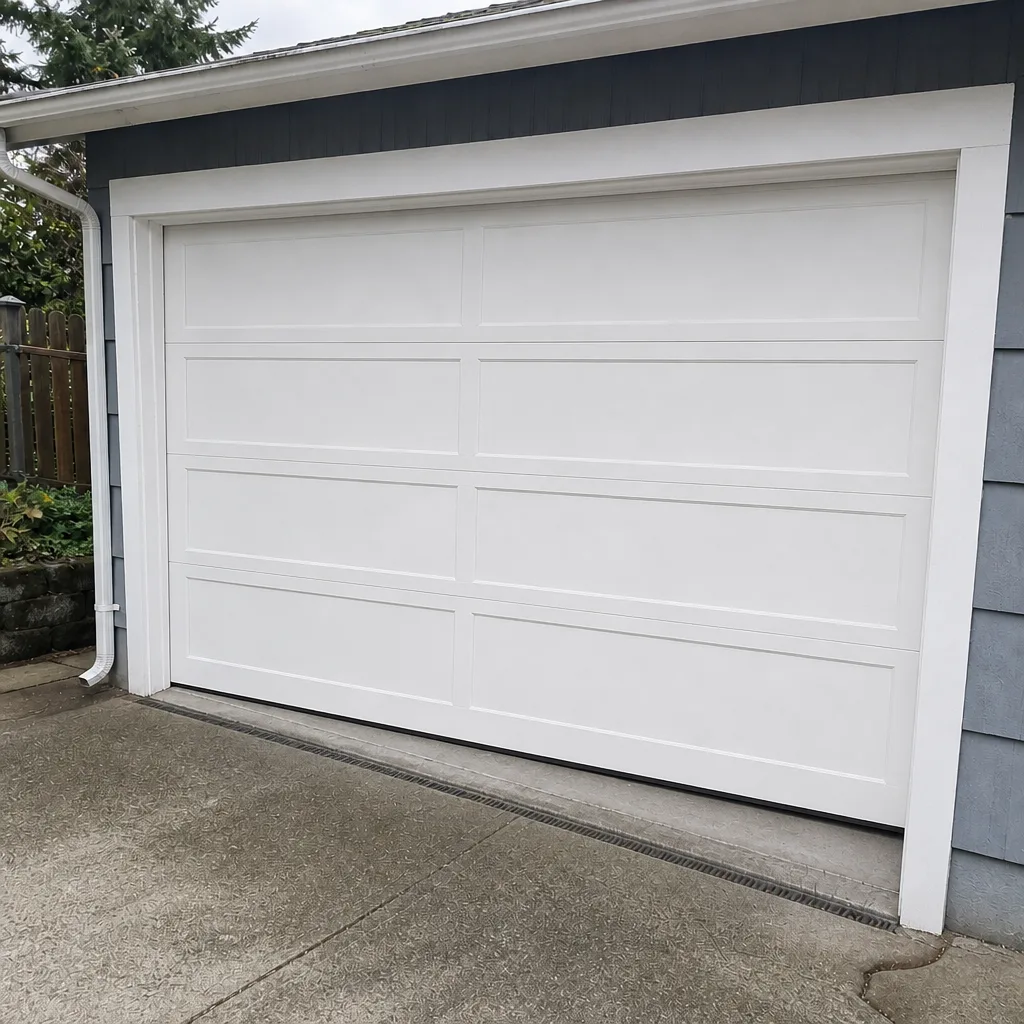 After
When to Call a Professional
Some seasonal care is safely DIY: checking seals by touch, clearing debris from tracks, testing safety reversal, and watching for noise. Other situations need a trained technician, full stop. Call a professional when your door feels heavy or won’t hold its balance, when you hear a pop or see a broken spring, when a track is visibly bent, when the opener reverses for no clear reason or shows limit errors that persist, or when a seal or weatherstripping replacement needs to be done to close against driven rain. Springs and electrical opener work are the two categories where DIY risks injury or damage. Garage Door Repair West Seattle offers free estimates in West Seattle, and we work on whatever brand is on your door. Call (866) 937-8026 to schedule. Repairs get a written price agreed before any work begins.
Frequently Asked Questions
Yes, and for two distinct reasons: moisture from November through March and dryness-driven shrinkage in summer. Because our seasons are moderate rather than extreme, the damage accumulates quietly instead of announcing itself with a dramatic failure. A fall reset and a summer check prevent most of the problems we see in West Seattle homes.
October is the ideal month. That gives you time to replace a worn bottom seal, check perimeter weatherstripping, test the door’s balance, and tighten hardware before the rain sets in. Waiting until the wet season is underway means fixing problems after water has already gotten in. Call (866) 937-8026 to book a fall inspection with a free estimate.
Cooler temperatures cause metal components in the door, tracks, and hinges to contract slightly, which shifts how the springs balance the door. A door that adjusted perfectly in summer can feel heavier or drift by December. If it feels notably heavy or won’t hold its position when you test it by hand, have a technician check the springs before it fails. Springs are dangerous to adjust yourself.
Temperature-driven contraction changes the door’s balance and travel range, so the opener’s force and limit settings no longer match the door. It reads the mismatch as an obstruction and reverses or fails to close completely. A technician can check the door’s balance and adjust the settings to fit the season. Call (866) 937-8026 for a free estimate.
Simple bottom seals are often a manageable DIY replacement, but the perimeter weatherstripping and threshold matter just as much in West Seattle’s horizontal rain. If you’re not sure whether it’s the seal alone or the whole perimeter that’s failing, have it inspected. We stock common seals, so replacements are typically handled the same visit with a written price quoted first.
It matters. West Seattle isn’t hot, but UV exposure over years fades and chalks south-facing door panels, and the dry air shrinks rubber seals slightly. Both are slow, cumulative effects. A yearly check of the seal condition and the door’s finish in the dry months protects the material so the wet season doesn’t find new weak points.
The Bottom Line
Seasonal garage door care in West Seattle comes down to working with the climate you have, not the one most maintenance advice assumes. Moisture from November through March does the most damage, so October is your most valuable maintenance month: seals, weatherstripping, tracks, hardware, and a balance check. The dry season brings its own quiet risks from UV exposure, seal shrinkage, and opener settings that no longer fit a changing door. A fall reset, a summer check, and a five-minute look every month cover most of it. For anything involving springs, tracks, or opener electronics, have a trained technician handle it with a written price agreed ahead of time.
Get a Free Estimate
If your garage door needs a seasonal check, a repair, or a part replaced, call Garage Door Repair West Seattle at (866) 937-8026 for a free estimate. We work on your brand, whether it’s LiftMaster, Chamberlain, Genie, Clopay, or any of the other major systems installed in West Seattle homes, and we’ll confirm a written price with you before any work starts. Spring, seal, track, and opener problems are all work we handle directly.
Written by the team at Garage Door Repair West Seattle.