Last updated November 23, 2026
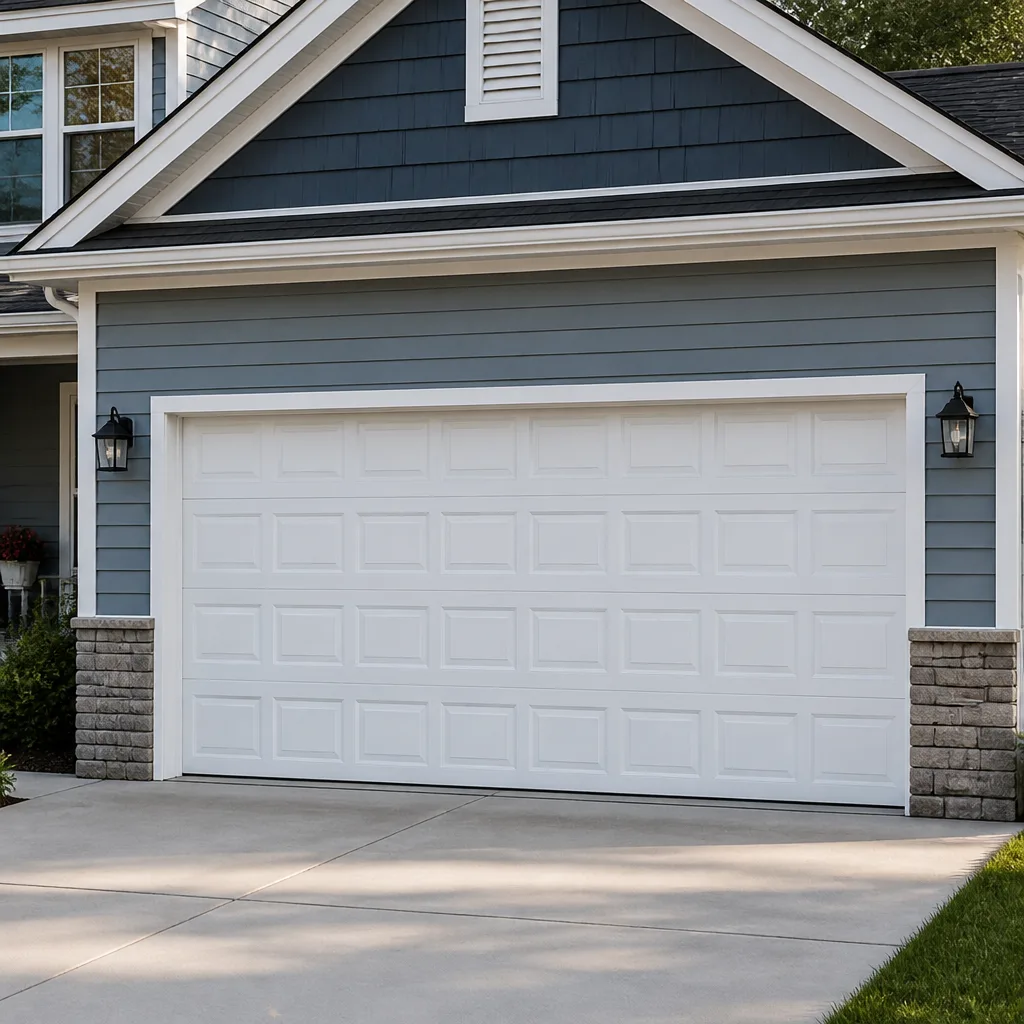 Raised-panel steel
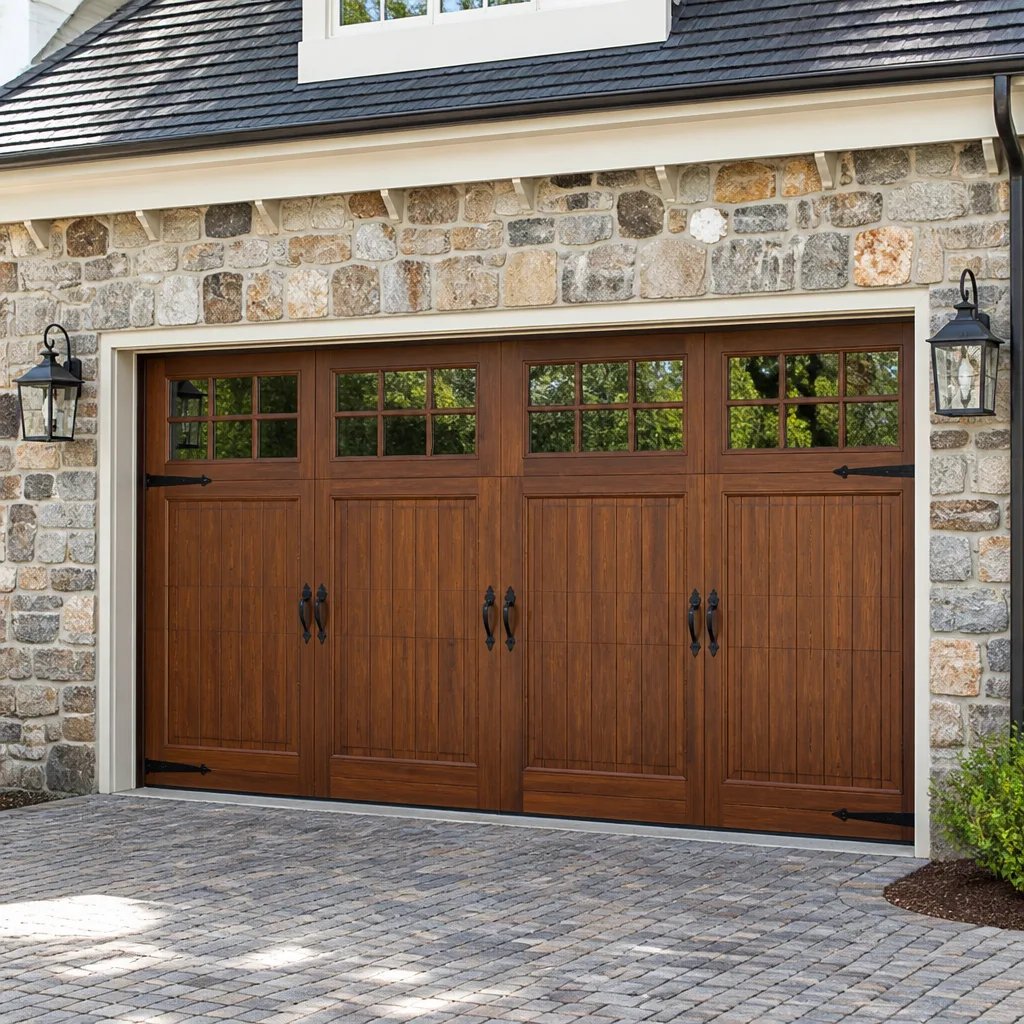 Carriage house
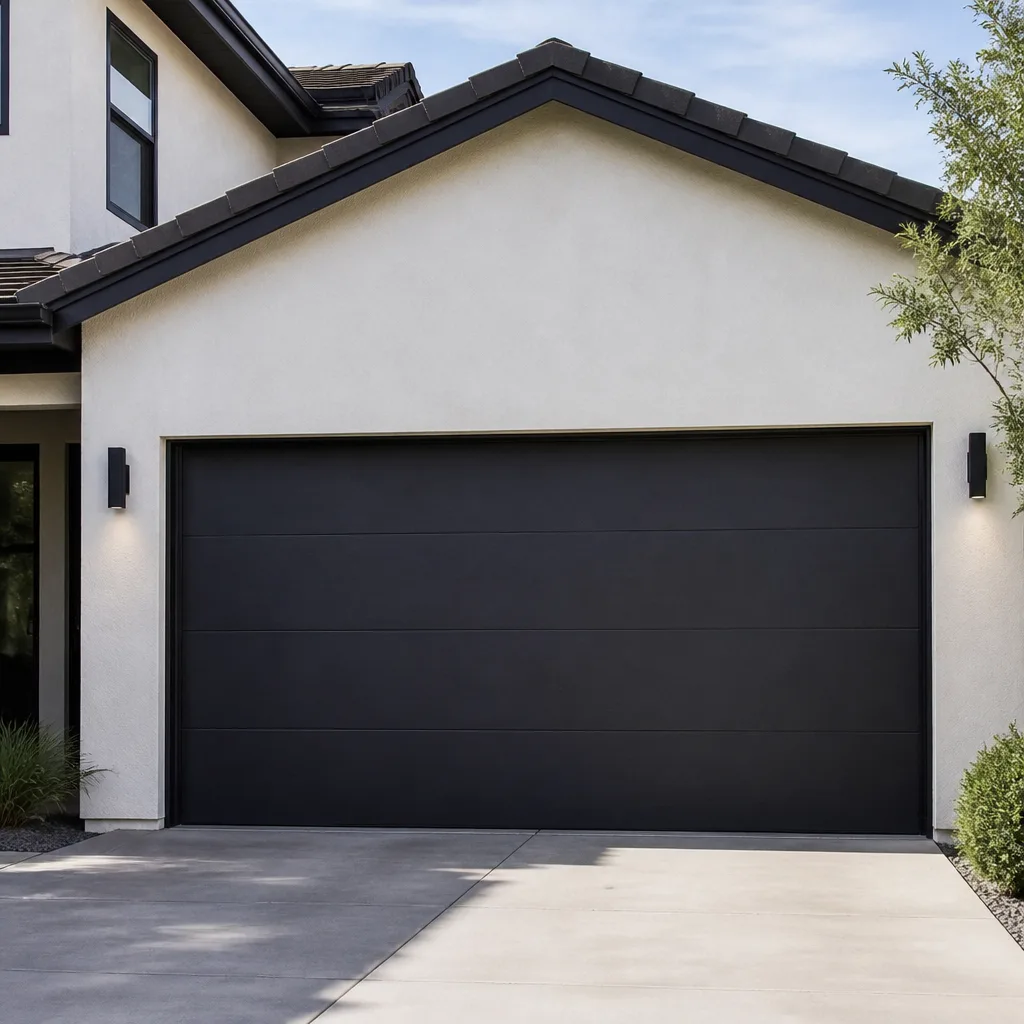 Modern flush
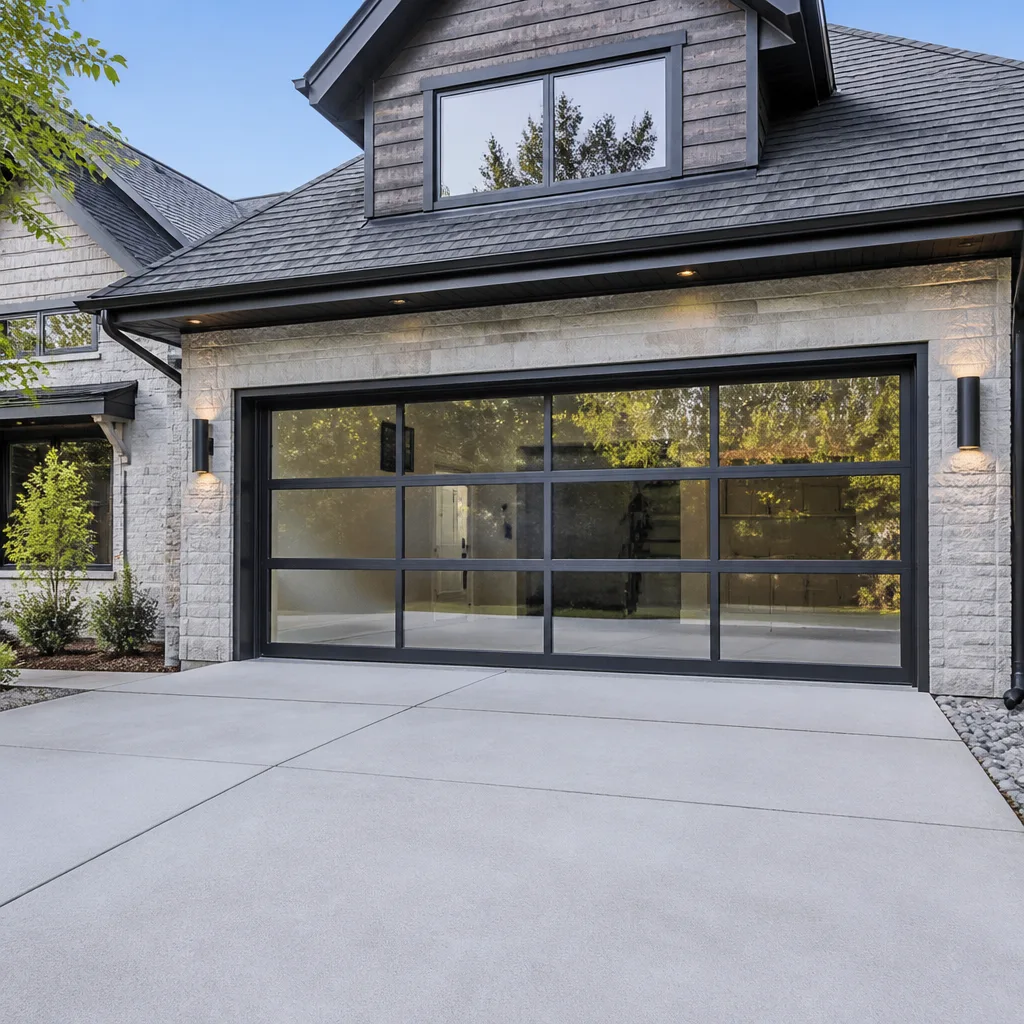 Full-view glass
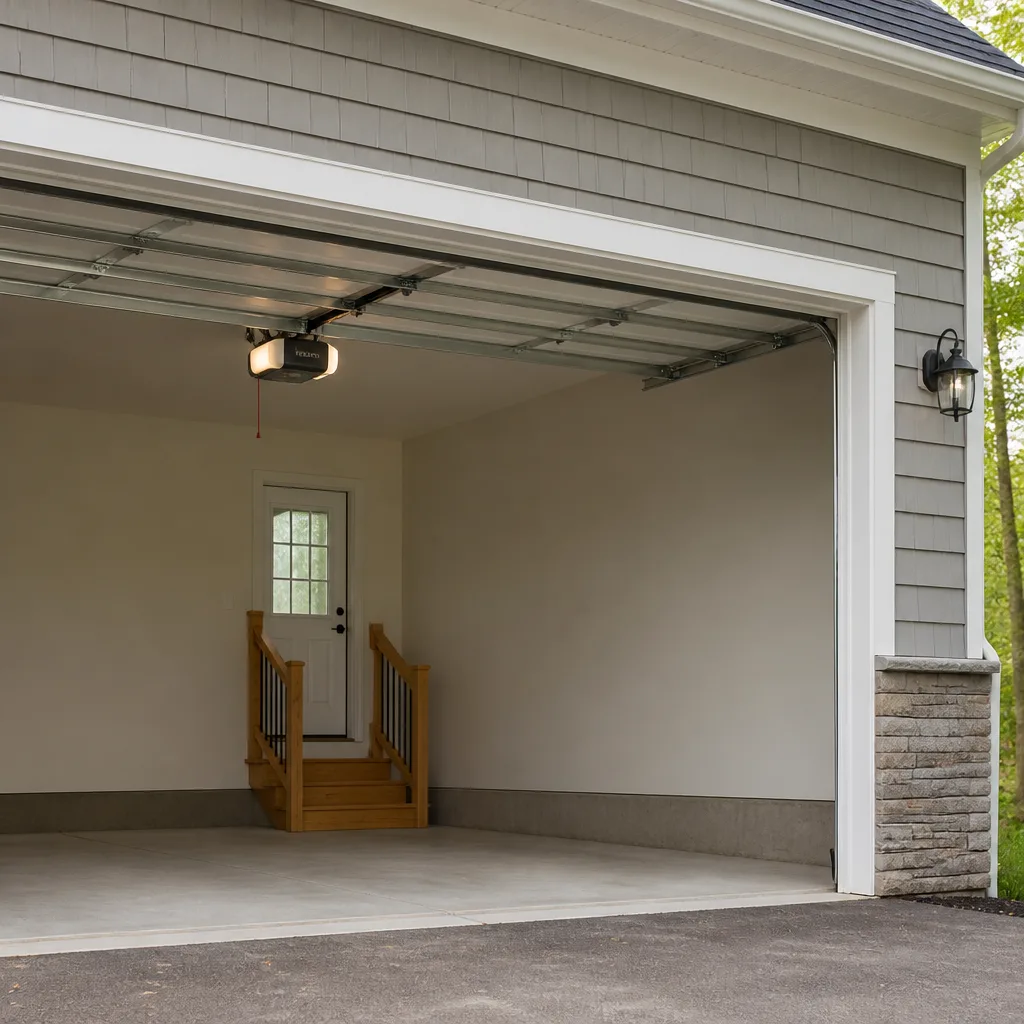 LiftMaster openers
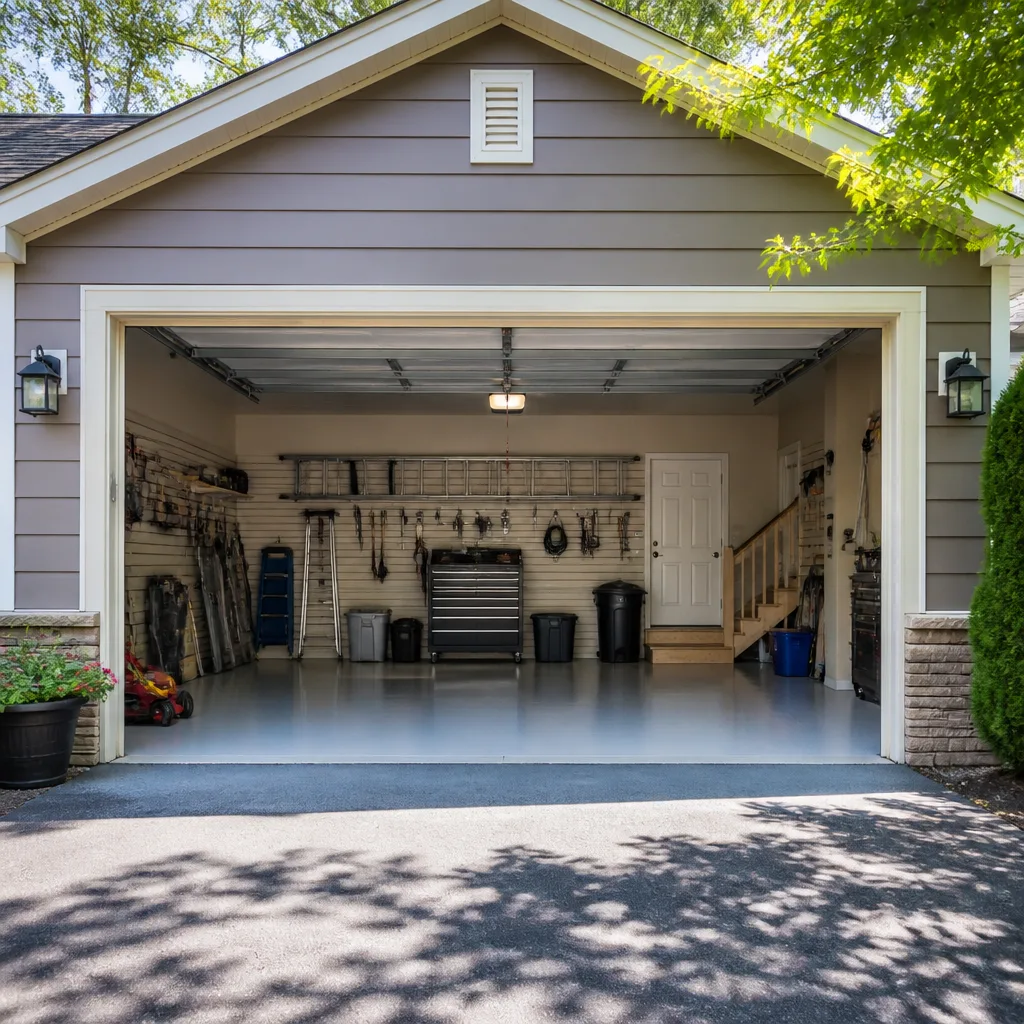 Chamberlain openers
Full 25-point door and opener safety check with every visit - springs, cables, rollers, tracks, and your LiftMaster or Chamberlain opener included
You get a price before we start. It does not change when the pro arrives.
Get your free estimateGarage Door Permits, Codes & Inspections in West Seattle, WA: What You Need to Know
Here’s the counterintuitive part most West Seattle homeowners get wrong: the majority of garage door work on your house does not require a permit. Swapping a worn-out door for a new one of the same size, replacing springs, repairing an opener, changing a panel – none of that usually needs a trip to the city. But the work that does cross the permit line is often the work nobody flags, because it hides behind a door replacement that otherwise looks routine. This guide walks through which garage door projects in West Seattle trigger Seattle and King County permits, which are explicitly exempt, how Washington State’s energy code shapes a new door installation, what an inspection actually checks, and how to fix work a previous owner skipped. If you’re planning a project or buying a home here, this is the piece to read before you sign anything.
Quick Answer
In West Seattle, replacing a garage door of the same size and type is typically exempt from permits, but any structural work – altering, widening, or replacing a header, reframing the opening, or changing the door’s rough opening dimensions – almost always requires a building permit from the Seattle Department of Construction & Inspections (SDCI). New installations in a conditioned garage also have to meet Washington State energy code U-factor and R-value requirements. When in doubt, call SDCI directly; requirements vary by project and asking your city’s building department is always the right first move.
Styles & brands we work with
- Raised-panel steel
- Carriage house
- Modern flush
- Full-view glass
- LiftMaster openers
- Chamberlain openers
Table of Contents
- Does a garage door replacement need a permit in West Seattle?
- When garage door work becomes structural (and permitted)
- How Washington State energy code affects new doors
- What “inspection” actually means for garage door work
- How to retroactively permit skipped work
- How to choose a West Seattle garage door contractor
- Common mistakes to avoid
- When to call a professional
Does a garage door replacement need a permit in West Seattle?
Usually, no – a straight replacement of a garage door with one of the same size, same type, and same location is typically exempt from a building permit in Seattle. That covers the everyday situation: your LiftMaster door operator still works but the door itself has dents, the wood frame is sound, the header above the opening is untouched, and you’re swapping in a new door of identical dimensions. In our experience across West Seattle neighborhoods from Alki to Delridge to Fauntleroy, that’s the majority of replacements we help homeowners with.
What makes a same-size swap exempt is that it doesn’t change the structure or the use of the building. You’re replacing a component, not the opening. A permit for a like-for-like replacement usually isn’t required because SDCI’s review process is focused on structural safety, life safety, and building code compliance – not on cosmetic changes to a component that’s already approved as part of the structure.
Here’s what typically does not require a permit in West Seattle:
- Replacing a garage door with an identical size and type
- Replacing torsion or extension springs
- Repairing or replacing a garage door opener
- Replacing damaged panels, hinges, rollers, or tracks
- Painting, staining, or refacing an existing door
- Installing a new opener on an existing door
Two caveats. First, if you live in a designated historic district or your home is a designated landmark, exterior changes – including a new garage door style – may need design review or approval even when the door itself is a like-for-like replacement. Second, if the door is part of a permitted structure that’s still under a compliance condition, check with SDCI before you change anything. If you’re not sure which side of the line your project falls on, our team can point you to the right SDCI contact when we come out for a Garage Door Repair West Seattle estimate, and we’ll do exactly the work you ask for once you’ve confirmed the permit situation.
When garage door work becomes structural (and permitted)
This is the point where a garage door project stops being a component replacement and becomes a building permit job. The moment you touch the header above the opening, the jambs, or the framing around the opening, you’re in structural territory and you almost certainly need a permit from SDCI. In West Seattle, that includes a lot of older homes with undersized garages and low headroom where a homeowner wants a wider or taller opening, or where old framing has sagged and needs to be rebuilt.
Work that typically does require a building permit:
- Widening or heightening the garage door opening
- Replacing, adding to, or modifying the header beam above the opening
- Reframing the jambs or rough opening
- Removing or moving a structural post or wall segment
- Converting a garage to a living space, or vice versa
- Adding a new garage door opening where none existed
- Any change that alters the structural load path above the opening
The header is the key. That beam carries the load of the wall above the garage door opening. A door installer can swap a door; a contractor modifying or replacing the header needs to demonstrate, on paper, that the new beam is sized correctly for the span and load. SDCI reviews that calculation as part of the permit. Without it, an inspector has no way to know the work was done to code – and neither does a future buyer’s inspector.
Here’s the West Seattle wrinkle. Many homes built in the mid-20th century around West Seattle and White Center have shallow garages with narrow openings – often 8 feet wide and 7 feet tall – and original headers that were sized for a smaller door. Homeowners who want to fit a modern vehicle or a larger panel door sometimes discover the opening has to be modified. That’s a structural change. It’s the exact scenario where a contractor who treats a “door replacement” as a non-permitted job can create a problem that surfaces years later at sale. If your project needs framing work, our garage door installation team works with the door itself and coordinates with the framing contractor doing the structural work, so the finished opening is square and the new door fits.
How Washington State energy code affects new doors
Washington State’s energy code, the Washington State Energy Code (WSEC), sets minimum thermal performance requirements for garage doors that separate a conditioned space from unconditioned space. In plain English: if your garage is attached to a heated home and the wall between them is insulated, the garage door itself is often treated as part of the building’s thermal envelope, and a new door has to meet a U-factor requirement. The U-factor measures how much heat passes through; the R-value is its inverse – the higher the R-value, the better the insulation.
Whether your garage counts as conditioned or unconditioned depends on how it’s built and how it’s used. A garage with an insulated, weather-sealed wall between it and the house, and a heated living space above or beside it, is more likely to be treated as within the thermal envelope. A detached garage, or one separated from living space by an uninsulated wall, usually isn’t.
When the energy code applies, here’s what changes for a new door:
- The door needs an insulation R-value that meets WSEC minimums for your climate zone – King County falls in the state’s Zone 4, which has specific U-factor tables.
- You need documentation from the manufacturer showing the door’s tested U-factor, not just a marketing R-value.
- The perimeter weatherstripping, bottom seal, and door-to-frame fit become part of the compliance picture, not just a comfort feature.
- Insulated polyurethane or polystyrene core doors are usually the practical choice when code requires thermal performance.
The practical takeaway: don’t buy a new garage door for a conditioned garage purely on price. Ask your installer for the door’s tested U-factor and confirm it with SDCI before you commit, because a door that doesn’t meet code is a door an inspector can flag on your project. If you’re working with a Clopay or Amarr door, we can walk through which models carry the thermal documentation SDCI wants to see, and our garage door repair team can clarify what parts of your existing door assembly already meet code.
What “inspection” actually means for garage door work
When garage door work is permitted, an inspection is a scheduled site visit by a city inspector who verifies the work was done to the approved plans and the code. For a garage door project that involved a header or opening modification, the inspector typically reviews the framing, attachment, and door installation as part of the project’s overall inspection schedule. It’s not a visit that focuses on your springs or your opener – those aren’t structural.
A typical inspection sequence for permitted garage door structural work looks like this:
- Permit is issued with plans showing the opening dimensions, header size, and attachment details.
- Framing inspection – the inspector reviews the header, jambs, and connections before any finish or door is installed.
- Final inspection – the inspector confirms the installed door matches the permitted scope and the opening is stable and weather-tight.
- Approval is recorded; your permit file closes.
What the inspector is actually checking at final:
- The rough opening dimensions match the permitted plans
- The header is the size and material called for on the plans
- Fasteners and connections are correct and count matches the plan
- The door mounts securely and operates without binding
- Exterior weather sealing and flashing are in place
- The door itself – if energy code applies – is the specified model
What the inspector is not checking, unless you asked them to: the springs, the opener, the safety reverse, the balance of the door. Those belong to the trade, not the permit. Our team is fluent in the eight brands West Seattle homes most often have – LiftMaster, Chamberlain, Genie, Clopay, Amarr, Wayne Dalton, Craftsman, and Raynor – and our technicians have up to 13 years of experience installing and repairing doors to code-compliant openings.
How to retroactively permit skipped work
If a previous owner or contractor did structural garage door work without a permit, the work isn’t automatically condemned – it just has to be brought into compliance. SDCI has a process for this, and in our experience it’s usually manageable, though the timeline depends on how busy the city’s review queue is. The basic steps:
- Find out what was done, and when. SDCI permit records are searchable by address. Pull the permit history for your home to see what was permitted and what wasn’t. If the work appears unpermitted, note the scope.
- Call SDCI and ask about retroactive permitting. Ask specifically about the “retroactive permit” or “after-the-fact permit” process for the work in question. Requirements and fees depend on the scope.
- Hire the right professional to document the work. If the work was structural, you may need a licensed structural engineer or architect to produce drawings that show the existing condition and confirm it meets code. For a garage door opening that’s already framed, an engineer’s letter of observation is often what SDCI needs.
- Submit the permit application. Include the drawings, the engineer’s documentation if required, and a clear description of what was installed. Pay the permit fee and wait for review.
- Schedule inspections. Once the permit is issued, the inspector will review the existing work against the approved plans. If it passes, you get a record that closes the loop. If it doesn’t, the inspector will tell you what has to be corrected – which may involve reframing or reinforcing the header.
- Keep the paperwork. Once the permit is closed, store the permit number and approval with your home records. It’s exactly what a buyer’s inspector will look for.
Fees for retroactive permits depend on the scope of work and SDCI’s current fee schedule, so we won’t guess at a number – call SDCI for the figure for your project. If the work turns out to only need a door adjustment or weather sealing, our garage door repair team can often handle that piece quickly, but the permit is between you, SDCI, and (if structural) the licensed design professional.
How to choose a West Seattle garage door contractor
The good news: garage doors are a category where the difference between a good contractor and a bad one shows up fast. The bad news: the category is crowded, and not every contractor is set up to do structural work, work with the city, or honor a scope. In our experience the best way to interview a garage door contractor is to ask about a handful of specific things.
What to ask up front:
- Which door brands do you work with? A company that’s fluent in the brands already on West Seattle homes – LiftMaster, Chamberlain, Genie, Clopay, Amarr, Wayne Dalton, Craftsman, Raynor – won’t need to special-order parts on day one. If they only service one brand, they probably aren’t set up for your door.
- Will you confirm the permit situation before you start? A contractor who treats structural work as routine without mentioning permits is not your contractor.
- Do you do the structural work, or do you coordinate? Many door installers only install doors. If your project needs header work, ask who’s doing it and whether they’re permitted to.
- What’s the estimate in writing? A garage door estimate should be itemized – the door, the labor, the track, the springs, the opener work if any.
- Can you service my opener if it’s a LiftMaster or a Chamberlain? A good door contractor is also a good opener technician – our garage door opener repair team handles both legacy and smart-home-enabled drives.
- What’s your warranty – and what does it cover? A warranty on the door, a warranty on labor, and a warranty on parts are three different things.
West Seattle homes range from midcentury ranches to newer construction, and the door on a 1950s Fauntleroy house is often a different animal than the door on a newer Lincoln Park build. A contractor who works across the neighborhood regularly has seen more of that range.
Common Mistakes to Avoid
- Assuming any door replacement is automatically exempt. It usually is – until the header or opening has to change. Even a same-size door replacement with a modified header is a permitted structural project. Confirm with SDCI before the door is ordered.
- Skipping the permit because the door installer said so. Door installers aren’t always set up to evaluate structural scope. If the project touches framing, the only opinion that matters is the city’s.
- Ignoring the energy code on a conditioned garage. WSEC compliance goes beyond the door’s R-value; perimeter sealing and installation details count too, and SDCI may ask for the manufacturer’s tested U-factor documentation. Don’t accept a door without it.
- Treating inspection as the contractor’s job only. You are the permit holder. If the contractor doesn’t schedule the framing and final inspections, you’re the one whose permit file is open at sale.
- Letting a retroactive permit slide. Unpermitted structural work on a garage door opening is one of the most common items a pre-sale inspector finds. It doesn’t automatically kill a sale, but it can stall it while it’s resolved – so get ahead of it if you know it’s there.
- Choosing a contractor by lowest bid on structural work. The cheapest bid on a header replacement is often the one with the least documentation. Ask for the drawings and the permit number before you sign.
- Forgetting the door style review in historic districts. If your West Seattle home is in a designated historic district or is a designated landmark, exterior changes – including a new door design – may need design review even when the door is a like-for-like replacement.
When to Call a Professional
Call a professional for anything that involves a torsion spring, a structural header, or an opener you’ve never worked on. Springs are under extreme tension – more than a typical homeowner can safely handle – and the wrong tool or the wrong step is genuinely dangerous. If your door has stopped working because of a spring, an opener failure, or a panel that’s hanging off the track, our team can assess it in person and quote the repair before any work starts. We also see plenty of West Seattle homeowners who waited too long and now need a full door replacement – in that case, we’ll tell you honestly when a repair isn’t worth it. Garage Door Repair West Seattle offers free estimates in West Seattle – call (866) 937-8026 to schedule one.
See the difference
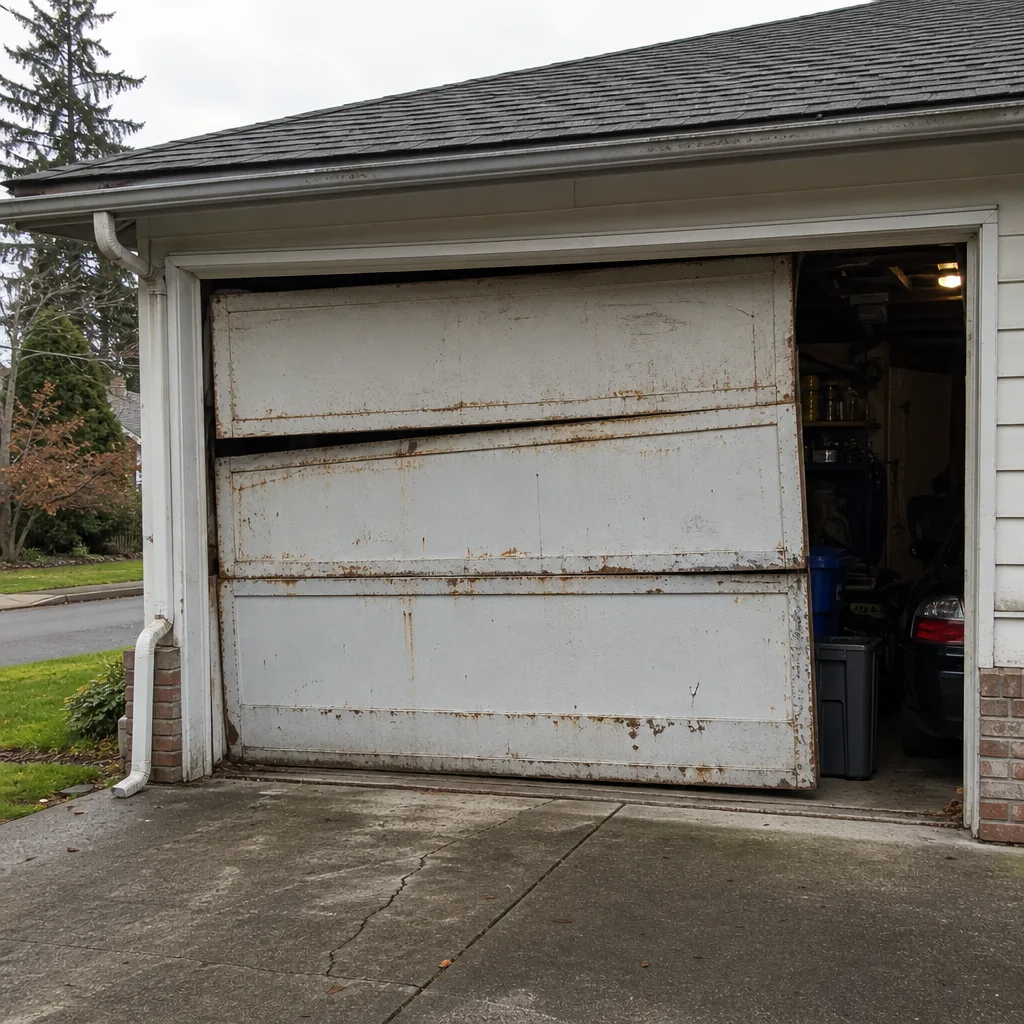 Before
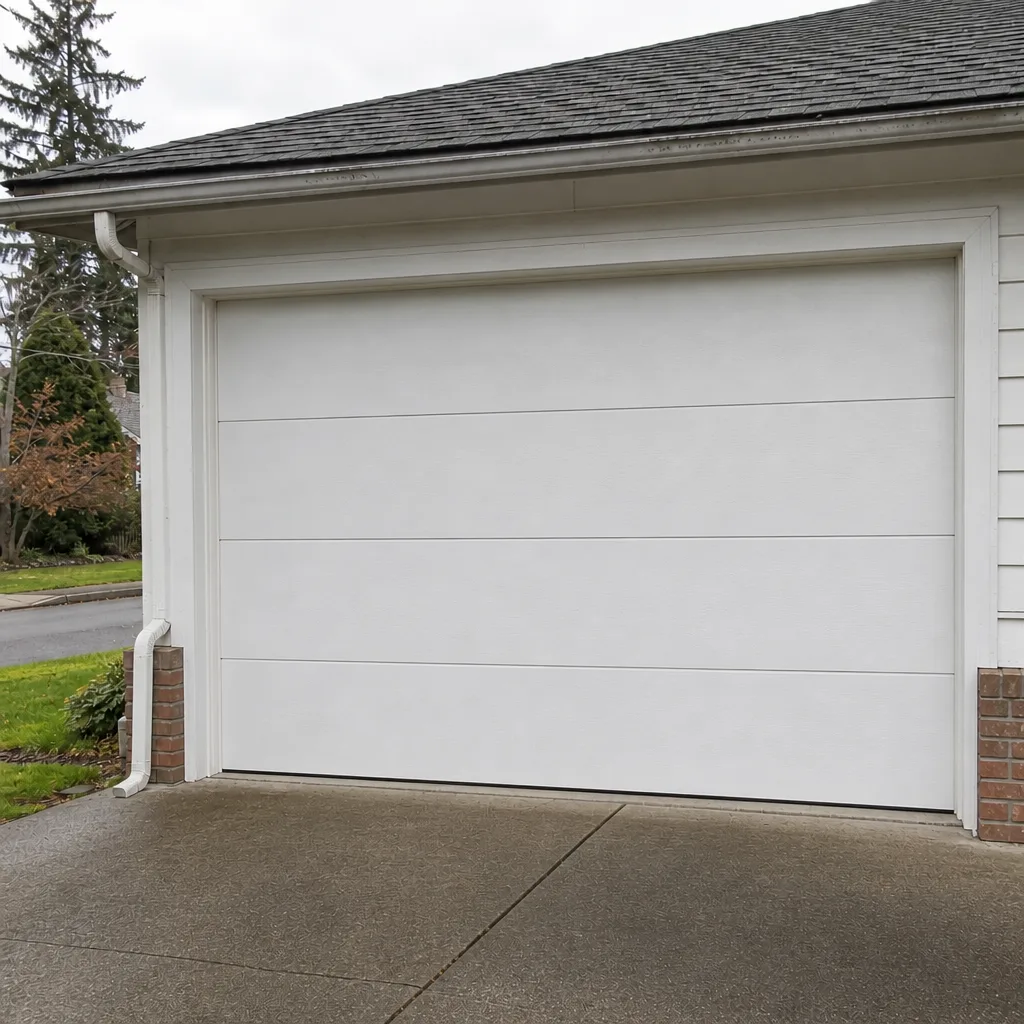 After
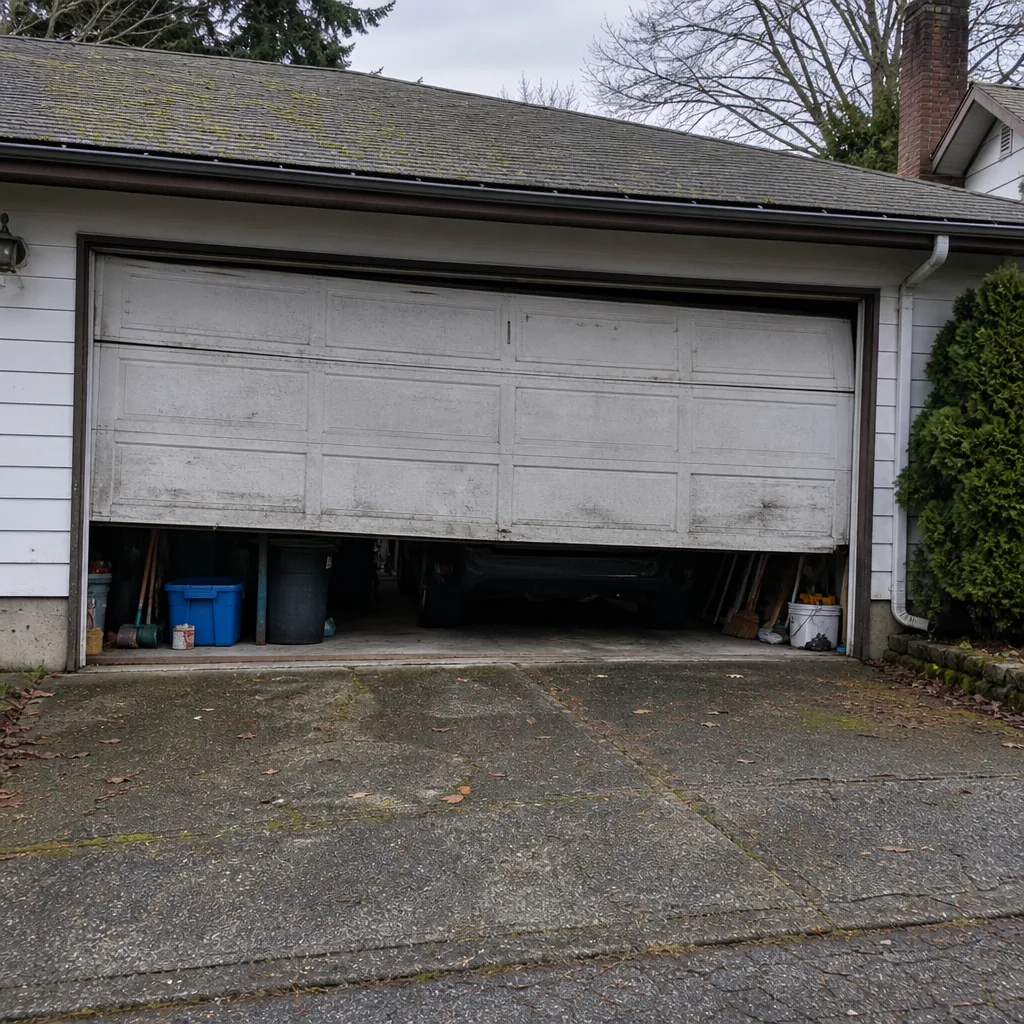 Before
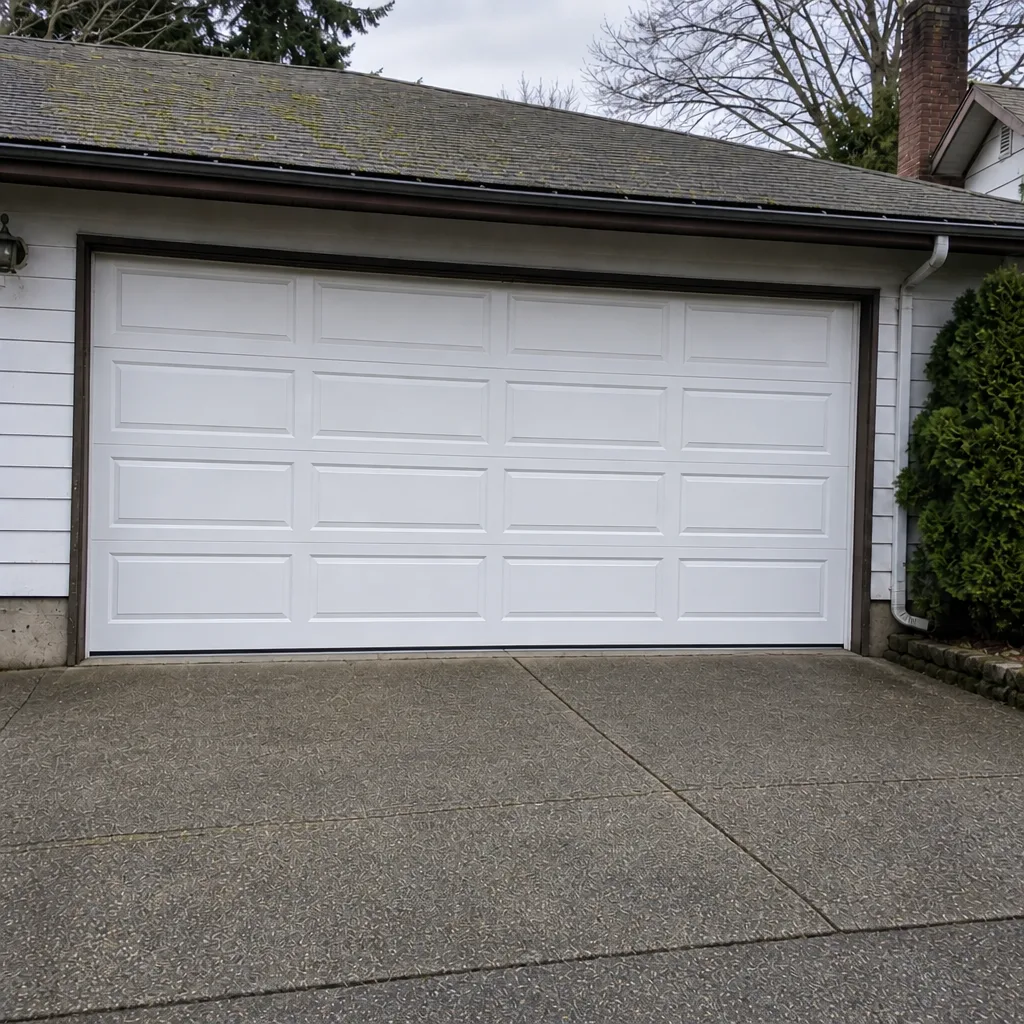 After
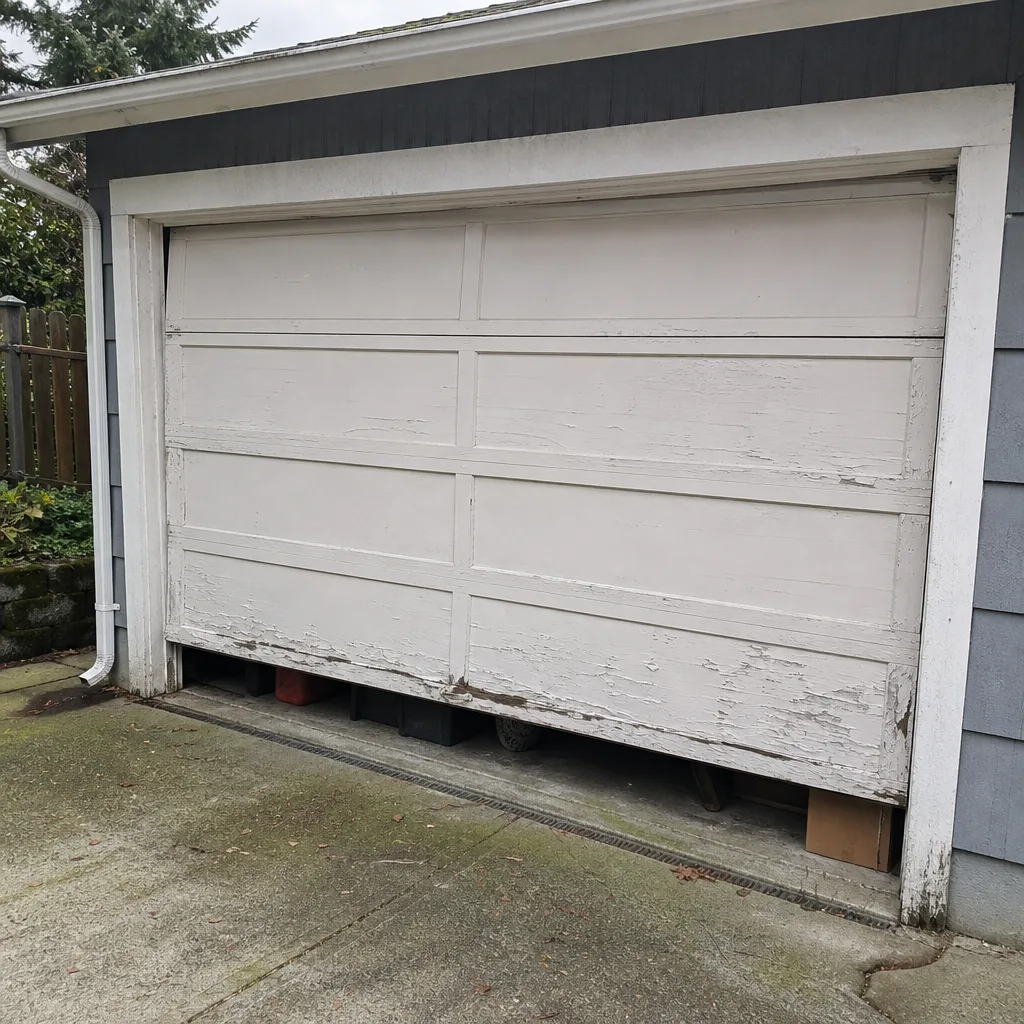 Before
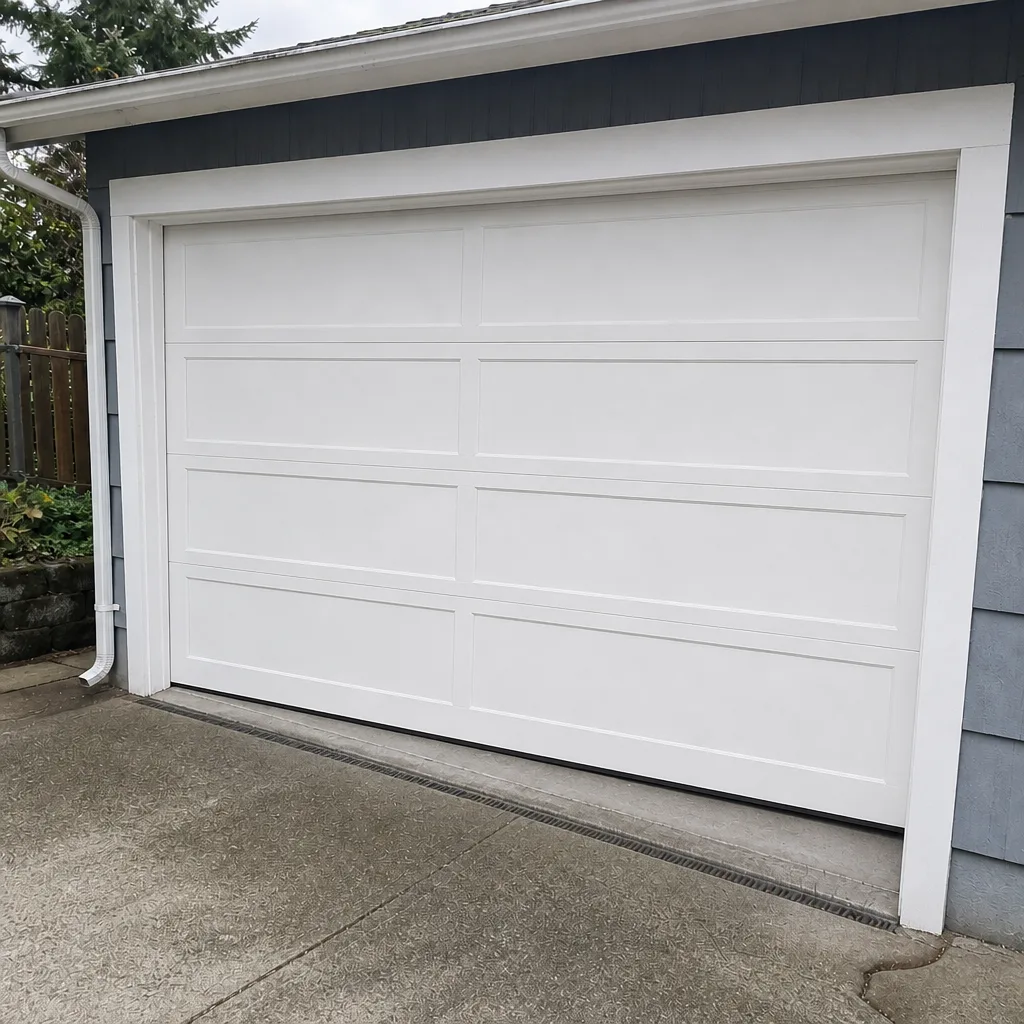 After
Frequently Asked Questions
Usually not, if the replacement is the same size and type as the existing door and no structural or framing changes are involved. A same-size swap is typically treated as an exempt component replacement by SDCI. If the project involves the header, jambs, or rough opening, it almost always requires a building permit. When in doubt, call SDCI directly before you order the door.
Permit fees depend on the scope of the project and SDCI’s current fee schedule, so we won’t quote a number without knowing the specifics. Structural work on a garage door opening is generally reviewed as part of a larger permit, which affects the fee. Call SDCI’s permit desk with your project description for an exact figure.
No. Spring replacement is a repair of an existing component and doesn’t change the structure or the use of the building, so it’s not a permitted project. It is, however, one of the most dangerous repairs on a garage door – torsion springs are under extreme tension – so it belongs with a trained technician. If a spring is broken, call us and we’ll quote the repair before any work begins.
It can, if your garage is part of the conditioned envelope of the home – for example, an attached garage separated from living space by an insulated wall. In that case the door has to meet WSEC U-factor requirements, and you’ll need the manufacturer’s tested U-factor documentation. Ask your installer for that documentation before you sign. Detached garages and unconditioned garages are usually not affected.
Yes. We can look at the project in person and tell you what we see – a same-size door swap, a structural change, or something in between – and point you to the right SDCI contact. We don’t issue permits; the city does. Call (866) 937-8026 and we’ll schedule a free estimate and a walk-through.
It depends on the scope. A repair that doesn’t touch framing – a spring, an opener, a panel, a set of rollers – typically isn’t a permitted project, so there’s no permit cost. Structural work that requires a permit, drawings, and inspections will cost more than a same-size replacement because of the additional review and documentation. We’ll give you a written estimate before any work starts, and the estimate sets the final price.
The Bottom Line
Most garage door work in West Seattle – a same-size door swap, a spring replacement, an opener repair – doesn’t need a permit. The exceptions are structural: header changes, opening modifications, and framing work, which almost always require a SDCI permit and an inspection. New doors on conditioned garages also have to meet Washington State energy code. And if you’ve inherited unpermitted structural work, it can be retroactively permitted with the right documentation and engineer. Read the guide, ask SDCI the specific questions, and choose a contractor who treats permit scope as a real question, not a checkbox.
Written by the team at Garage Door Repair West Seattle.