Last updated November 23, 2026
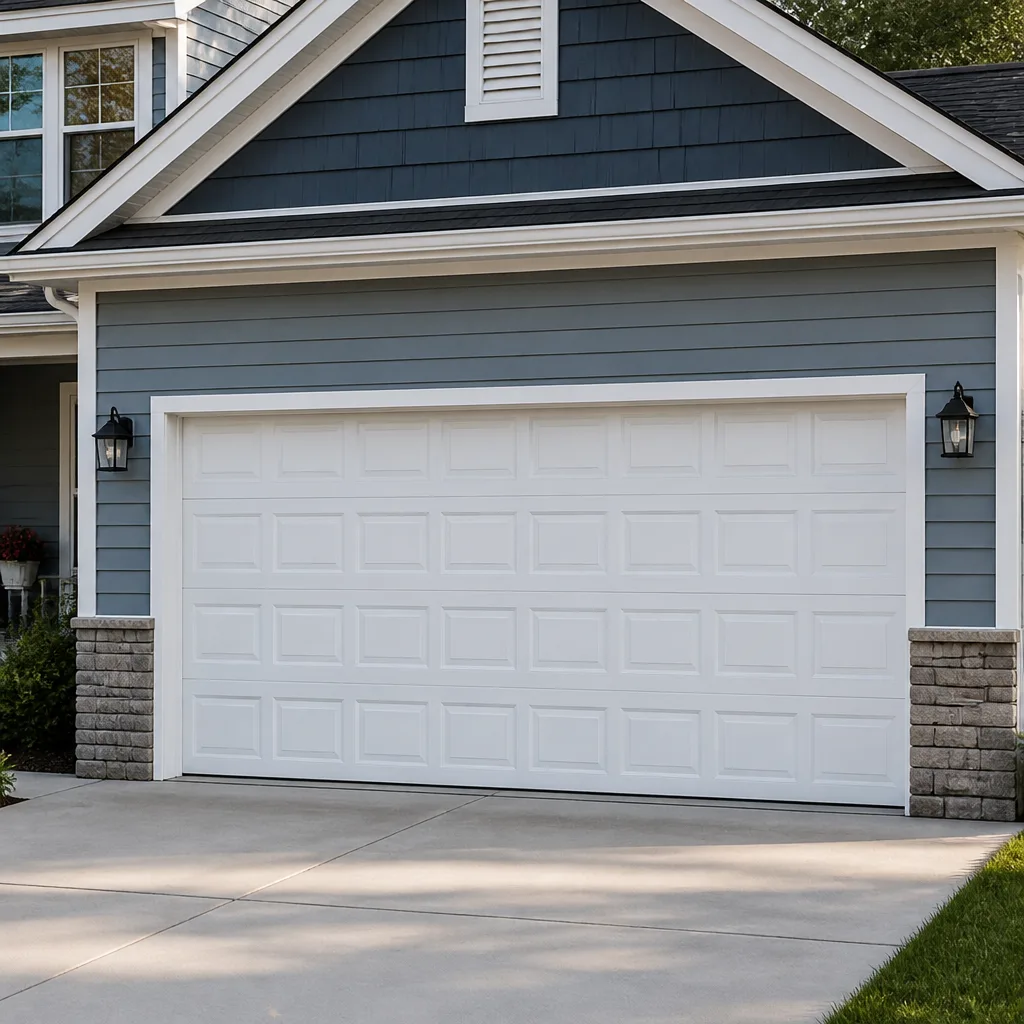 Raised-panel steel
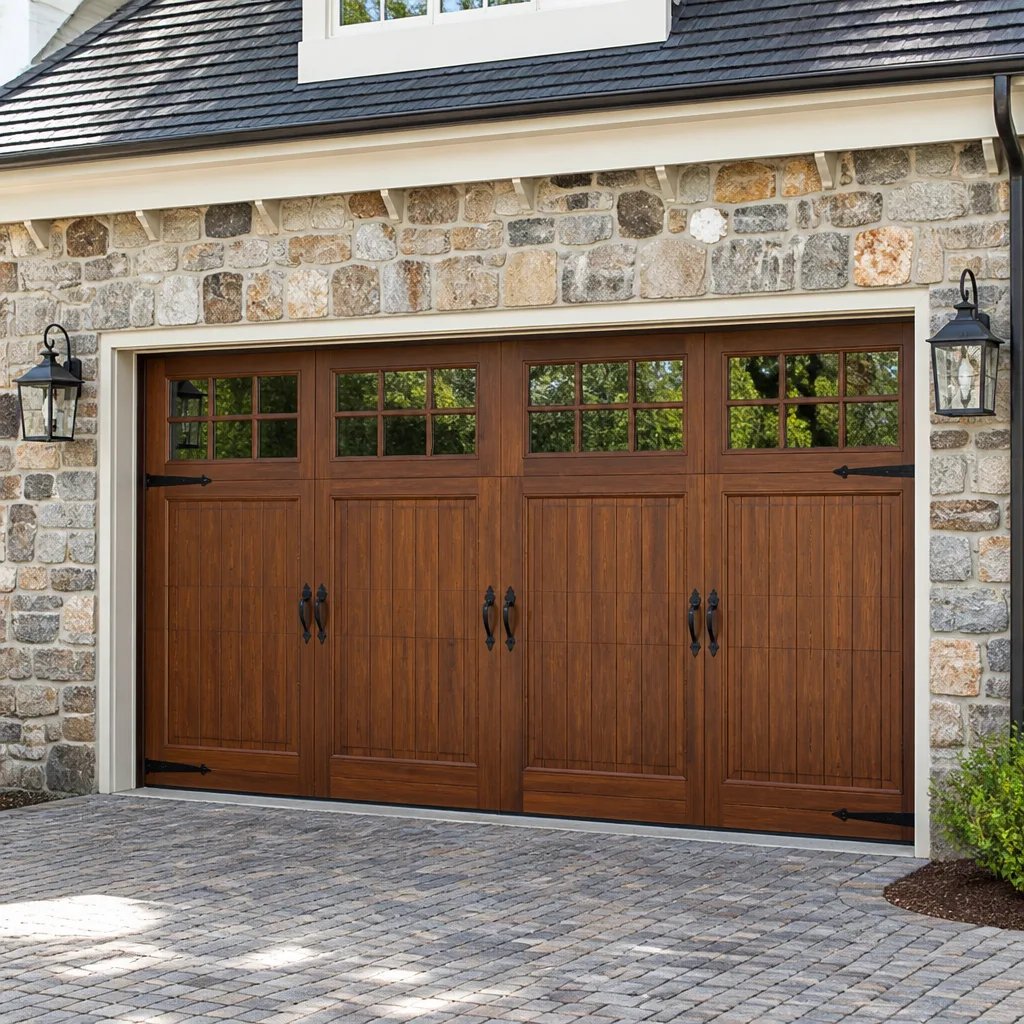 Carriage house
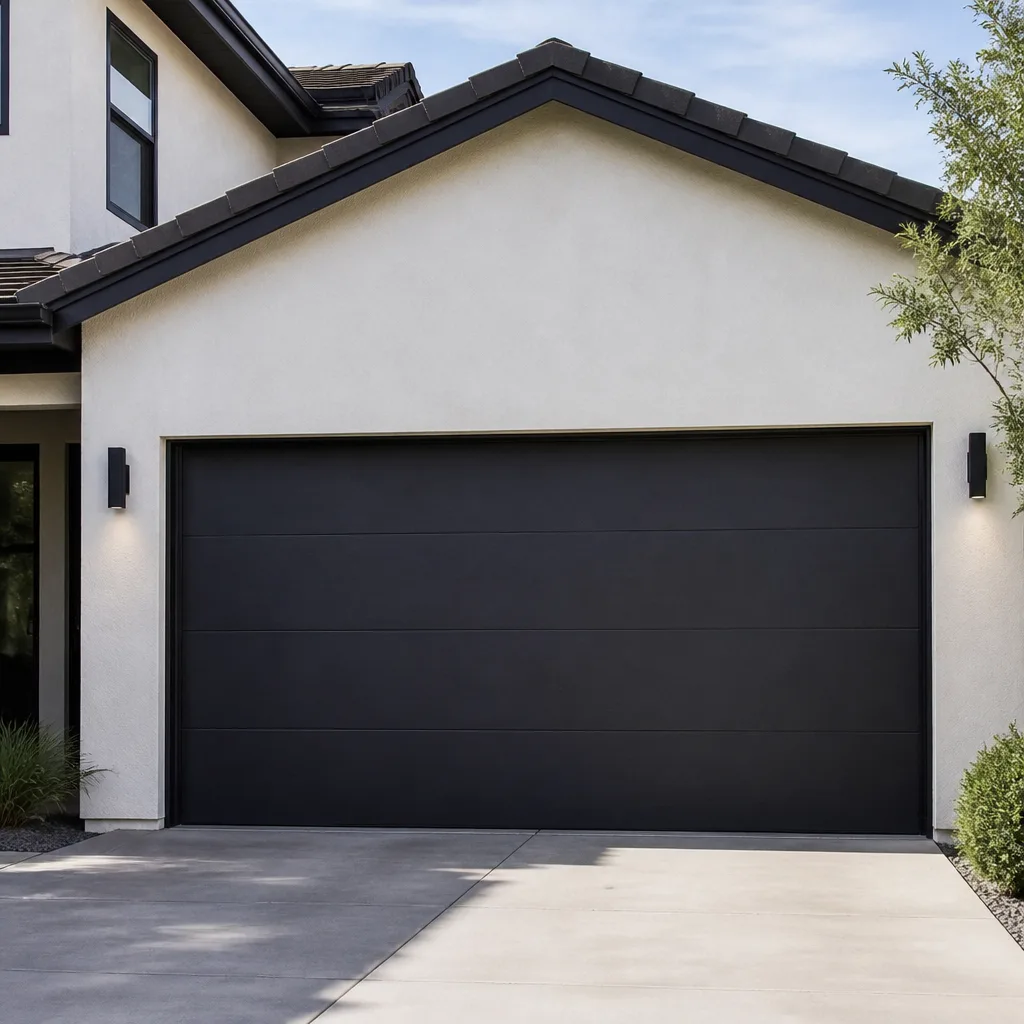 Modern flush
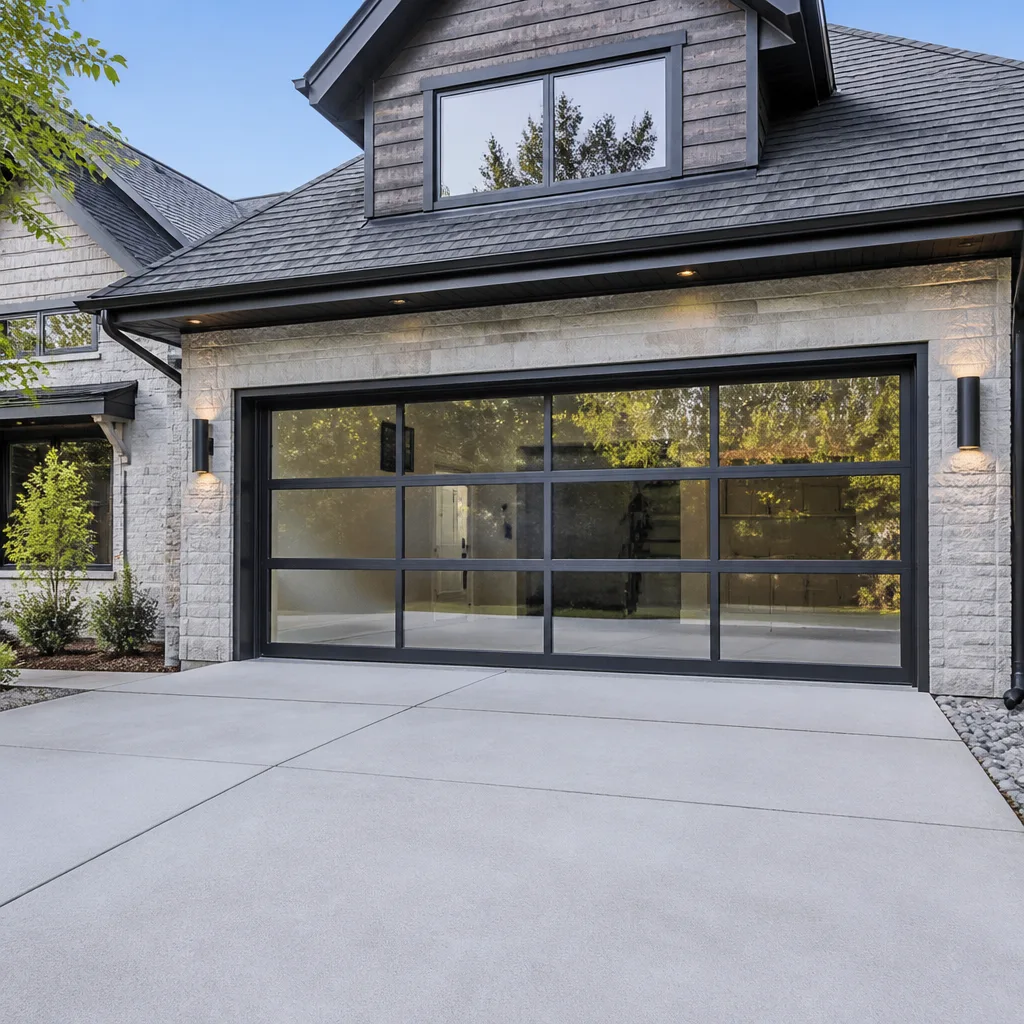 Full-view glass
 LiftMaster openers
 Chamberlain openers
Full 25-point door and opener safety check with every visit - springs, cables, rollers, tracks, and your LiftMaster or Chamberlain opener included
You get a price before we start. It does not change when the pro arrives.
Get your free estimateGarage Door Warning Signs: A West Seattle Homeowner’s Reference Guide
A torsion spring under load can fail in under two seconds, and when it goes it releases enough stored energy to bend a track or dent a car hood parked in the driveway. But here’s the part most homeowners miss: that spring almost never fails out of nowhere. It gives you weeks of visible notice first, in the form of a rust line, a coil gap, or a slightly sagging door – signs that read as ordinary wear if you don’t know what you’re looking at. A fraying cable looks like “a little worn.” A popping sound sounds like “the door settling.” This guide walks you through every warning sign a garage door gives, component by component, so you can tell cosmetic wear from the kind of problem that needs a technician this week. We’ll cover spring, cable, roller and track conditions at three stages, decode what each sound means, and hand you a monthly balance test you can run in a couple of minutes.
Quick Answer
The most important garage door warning signs are a visible gap in a torsion spring coil, a frayed or kinked lift cable, a door that drifts down when you release it halfway, and any door that has gotten noticeably louder or slower over the past few months. A door that still opens – just loudly, or just slowly – is the most common situation we’re called to in West Seattle, and it’s also the one closest to a full breakdown. If you see a coil gap or a fraying cable, stop using the door and call a technician rather than running it again.
Styles & brands we work with
- Raised-panel steel
- Carriage house
- Modern flush
- Full-view glass
- LiftMaster openers
- Chamberlain openers
Table of Contents
- Spring Warning Signs: Healthy, Degrading, Near-Failure
- Cable Warning Signs: What Fraying Looks Like at Each Stage
- Rollers and Tracks: Surface Wear vs. Structural Failure
- Sound Diagnostics: What Each Noise Tells You
- The Monthly Balance Test and How to Read the Results
- Why “Slow But Working” Doors Are the Most Common Precursor to an Emergency Call
- What You Can Fix vs. What Requires a Professional
- How West Seattle’s Damp Season Accelerates Wear
Spring Warning Signs: Healthy, Degrading, Near-Failure
Springs are the first thing we check on any door, and they’re the component homeowners are most likely to misread. You don’t need to touch a spring to evaluate it – a visual scan from the floor is enough to sort a spring into one of three conditions.
Healthy
- The coil is tight and continuous with no visible gaps between winds.
- No rust streaks along the coil’s length, just a uniform finish.
- The door opens smoothly at a consistent speed with no lurch near the top.
Degrading
- A thin line of rust running along one side of the coil is the first tell. Rust forms where the metal has been flexing and thinning, and it’s the leading indicator of a spring approaching failure.
- The door opens a little faster or heavier than it used to, because a worn spring is losing lift.
- A faint stretch mark or a slightly uneven section of coil.
Near-Failure
- A visible gap between two coils, sometimes a centimeter or more. A coil gap means the spring has begun to crack inside and is at the end of its usable life.
- The door becomes very heavy when you raise it by hand, or it lurches downward on the way up. With torsion springs, that also means stored tension is doing something you don’t want it to.
- An actual break, which shows as a loose, flopping coil and a door that won’t lift at all.
We flag this as a safety matter, not a sales point: torsion springs are among the most dangerous DIY repairs in any part of a home, because the tension stored in a wound spring can cause serious injury if it releases while someone is holding a winding bar. A rust line means a technician needs to look at the spring in the coming days. A gap means the door should stay down until the spring is replaced. We work on springs daily, including replacement of matched pairs – which is usually the right call, since a paired spring has loaded and unloaded for every one of the same cycles as its twin.
Cable Warning Signs: What Fraying Looks Like at Each Stage
Cable condition is the second thing we look at, and it’s the sign homeowners most often describe as “it looks a little worn.” That phrase is doing a lot of work. Here’s how to tell the stages apart.
Healthy
- The cable runs in a smooth, consistent line from the drum at the top of the shaft down to the bottom bracket.
- The steel strands are uniformly bright or evenly galvanized with no broken filaments.
- No kinks or loops, and cable tension looks even on both sides of the door.
Degrading
- Fuzzing along one section, meaning individual wire filaments are starting to break. A single broken wire catches a fingernail when you run your hand along the cable – do this gently and with the door fully down.
- A slight curve or memory in the cable’s line where it used to be dead straight.
- Rust scale on the drum end, where moisture collects.
Near-Failure
- A frayed section with multiple broken strands, sometimes with a visible birdcage shape.
- A kink or sharp bend, which concentrates stress on a single point.
- Cable slack on one side with the door down. Slack on a lift cable means the door is one movement from dropping unevenly and jamming in a track.
A fraying cable is not something to tighten, oil, or wrap with tape. Cable failure is sudden and can whip loose, and the bottom bracket it attaches to is under enough tension that it should only be handled by a trained technician. When we see a frayed cable on a service call in West Seattle, we replace the set – cables on a door have lived identical lives, and it makes no sense to swap one and wait for its twin.
Rollers and Tracks: Surface Wear vs. Structural Failure
Rollers and tracks are the forgiving part of a garage door system. They wear out gradually and give loud, obvious warnings before anything fails, which makes them the easiest components to keep ahead of. Here’s what to check.
- Rollers – healthy: Steel rollers turn smoothly in their housings and have a light film of lubrication; nylon rollers are clean and rounded with no flattening. Wheels ride quietly in the track.
- Rollers – degrading: Nylon rollers flatten on one side, producing a bumpy ride and a rhythmic thump. Steel rollers develop a rough bearing, which you can hear as a squeal. The door begins to wobble slightly on the way up.
- Rollers – near-failure: A roller seizes and stops turning, so it drags along the track. You’ll hear scraping and see track wear as a shiny groove. The door can jump the track entirely if a seized roller hits a curve at the top.
- Tracks – healthy: Vertical tracks plumb and level, horizontal tracks aligned with the same width top and bottom, no dents or bends.
- Tracks – degrading: A slight bend where the vertical turns into the horizontal curve, usually from a door that drifted sideways. The door gets louder going through that curve.
- Tracks – near-failure: Obvious dents, a track knocked out of alignment, or the door hanging visibly off-center. Running the door in this state can pull rollers out of the track and warp a panel.
Rollers and track alignment are the DIY-friendly end of garage door maintenance. Replacing rollers, cleaning and lubricating the track, and tightening a loose bracket are all within reach if you’re comfortable on a stepladder. Straightening a bent track with a hammer is not – tracks are calibrated to the door, and a track bent back into place rarely returns to its original geometry.
Sound Diagnostics: What Each Noise Tells You
Sound is the most underused diagnostic tool a homeowner has. A garage door that’s working correctly makes almost no noise beyond a soft motor hum and the roll of the wheels. Every other sound maps to a mechanical cause. Here’s the glossary we run through when a West Seattle homeowner describes a noise over the phone.
| Sound | Likely Mechanical Cause |
|---|---|
| Grinding | Seized roller dragging in the track, or a dry torsion spring rubbing against its shaft. |
| Popping or snapping | Torsion spring cracking internally, or a cable jumping the drum. The loudest and most urgent sound on this list. |
| Rattling | Loose hinge bolts, a loose bottom bracket, or the door panels vibrating against the opener arm. |
| Squealing | Dry bearings in a steel roller, or a worn nylon roller’s bearing. |
| Thumping, rhythmic | A flat-spotted nylon roller, which produces one bump per revolution. |
| Clunking at one point in travel | A loose panel or a track section misshapen at the point the door passes through. |
| Rapid clicking from the opener | Stripped gear inside the opener’s drive, or a binding door fighting the motor. |
Two of these sounds are red flags on their own. A popping or snapping sound from above the door often means a spring is in its final cycles – stop using the door and have it looked at. Rapid clicking from the opener is usually an internal drive problem, which is squarely garage door opener repair territory and not something a homeowner should tackle with the opener still connected to the door. On a modern smart opener – we service LiftMaster, Chamberlain, Genie and Craftsman systems by name – internal gear wear typically shows up as clicking long before the opener stops moving the door.
The Monthly Balance Test and How to Read the Results
The balance test is the single most useful two-minute check a homeowner can run, and it tells you more about the health of a garage door’s springs than anything else. Here’s the sequence, and it’s the same one we walk through on a service call.
- Open the door fully using the wall control or remote.
- Disconnect the opener. Pull the red manual release handle so the door is running free of the motor.
- Raise the door by hand to about halfway and hold it there for a moment.
- Let go and watch. You are looking for what the door does in the first few seconds. Keep your hands clear of the door’s path and the track as you do this.
Now read the result:
- Door stays put: The springs are balanced against the door’s weight. Good.
- Door drifts down on its own: The springs have lost lift and are no longer holding the door’s weight. This is the earliest sign a torsion spring is heading toward failure, and it’s why a “slow but working” door is so often a spring that’s weeks from breaking.
- Door rolls up on its own: The springs are over-tensioned, which is a setup issue rather than a wear issue but still worth correcting.
- Door binds, sticks or comes off one side: Track alignment or a cable problem. Stop and call.
Reconnect the opener afterward by pulling the door up and letting the carriage re-engage. If the door drifts down – a spring losing tension – the most useful thing you can do is keep it down until a technician can look at it. Our technicians have up to 13 years of experience with spring, cable and balance work, and a balance test they run on a West Seattle door is the same check we’d want run on a door in any neighborhood from Fauntleroy to Alki.
Why “Slow But Working” Doors Are the Most Common Precursor to an Emergency Call
The calls we take most often aren’t from doors that have stopped working. They’re from doors that have been slow, loud or slightly off for weeks before failing. A door that stalls a little at the top, opens unevenly, or takes two tries to come up is a door in partial function – and partial function is how garage doors fail. They almost never go from healthy to broken overnight. They drift from healthy to degraded to near-failure on a timeline of days to months, and the degraded stage is quiet enough that a homeowner who doesn’t know what to look for assumes the problem is normal.
The reason this false comfort is so expensive isn’t the parts – it’s what happens to the rest of the door when a worn component finally lets go. A door that closes on a weakened spring lands unevenly onto the bottom of the track. A door with a seized roller drags the track out of alignment. A door that jams at speed can bend a panel or pull a bracket out of the header. A $20 roller and a loose hinge bolt are cheap problems. The track alignment and panel replacement that follow a hard failure are not.
So the goal isn’t to replace components the moment they show wear. It’s to know which wear signs mean “schedule a service visit” and which mean “stop using the door.” A door that’s a little noisy is a schedule-it problem. A door with a coil gap or a frayed cable is a stop-using-it problem. The monthly balance test above is what tells the two apart.
If a West Seattle door has been running slow for a while and you’re not sure which category it’s in, we’re happy to look at it. Free estimates, and the price is quoted and agreed before any work starts.
What You Can Fix vs. What Requires a Professional
The line between a DIY repair and one that needs a trained technician comes down to one thing: stored energy. Rollers, brackets, hinges and lubrication don’t hold tension. Springs, cables and anything connected to them do, and that’s where the danger lives.
You can handle these safely
- Tightening a loose hinge bolt, bracket bolt or track bolt with a wrench and the door fully down.
- Lubricating rollers, hinges and tracks with a purpose-made garage door lubricant – do not use a household spray or grease.
- Replacing worn rollers, which is a fitting job rather than a tension job.
- Cleaning the track and picking out debris or old lubrication.
- Replacing a remote battery or re-pairing a remote with the opener.
Stop and call a technician
- Any visible gap in a torsion spring, or any broken spring.
- Any frayed, kinked or slack cable. Never attempt to remove or adjust a cable under tension.
- Any spring replacement or adjustment – torsion springs require winding bars and a trained hand, and a wound spring that releases unexpectedly can cause serious injury.
- Any work on a bottom bracket, which is under enough tension from the cable that only a technician should touch it.
- A door that’s visibly off-track or hanging askew.
- Any electrical work inside the opener or the wall control, including opener gear, capacitor or logic board issues.
Springs under tension and a door that’s off its track are the two situations where the right answer is always a technician. If you see either on a door in West Seattle, keep it down and give us a call. We carry common parts, from springs and cables to rollers and hinges, so most repairs are done on the same visit. If the door’s brand is Clopay, Amarr, Wayne Dalton, Raynor, or one of the four opener brands we’re factory-familiar with, we’ve worked on that system before and know the parts on sight.
How West Seattle’s Damp Season Accelerates Wear
Garage doors in West Seattle age differently than doors in a dry climate, and it’s worth knowing which components take the hit. The region’s long wet season means the interior of a typical garage stays humid for months at a time. That humidity goes to work on the two components that rust first: springs and cables.
- Springs: A torsion spring that’s been flexing for years will start to rust along the coil at the first sign of thinning. In a damp garage, that rust line shows up earlier and grows faster. It’s the number one reason a spring that “looks fine” from a distance is actually in the degrading stage. Check the coil every few months in the wet season, looking for a streak of rust.
- Cables: Moisture collects at the drum end, where the cable winds onto the spool, and that’s where rust scale first appears. Rust scale on a cable is often the earliest sign of fuzzing to come.
- Rollers: Over-lubrication in a humid garage attracts dust, and dust turns into grinding paste. A little clean lubricant goes a long way; more is not better.
- Wood-door panels: The bottom section of any wood garage door takes moisture from below, and paint flakes and swells first. A swollen bottom panel stresses the door’s weight balance and shows up as a door that drifts on the balance test. If you’re dealing with a panel issue, a single section can often be replaced rather than the whole door.
If you’re evaluating a door for replacement rather than repair, our guide on garage door installation covers the material choices that handle humidity best, and the brands we install. If the door is just ready for a service visit, general garage door repair is where most West Seattle doors start.
Common Mistakes to Avoid
- Running the door after a coil gap appears. A gap means the spring has begun to crack internally. Every additional cycle puts the door closer to a hard failure that bends the track or the door itself.
- Taping a fraying cable instead of replacing it. Tape hides the warning sign without doing anything about the cause. The cable is under constant tension and will fail where it was always going to fail.
- Greasing a spring or cable to quiet a noise. Neither should be lubricated, and oil or grease on a cable hides the rust scale you need to see. Lubricate the rollers, hinges and tracks – not the springs or cables.
- Ignoring a balance-test drift because the door still opens. A door that drifts down when released halfway is a door with a spring on the way out. It will still open, right up until it doesn’t.
- Straightening a bent track with a hammer. A track that’s been pulled out of alignment is often worse after a DIY repair. If the door is off-center or binding on one side, stop and have it looked at.
- Assuming a slow, loud door is normal wear. West Seattle’s damp season accelerates spring and cable wear, but a noise the door didn’t make a year ago is a diagnostic signal, not a personality trait.
- Calling a general handyman for a spring or cable job. Springs and cables are the two components that should only be handled by a technician who works on garage doors daily. If you want a single team that handles the door, the opener and the individual parts, that’s what we do and nothing else.
See the difference
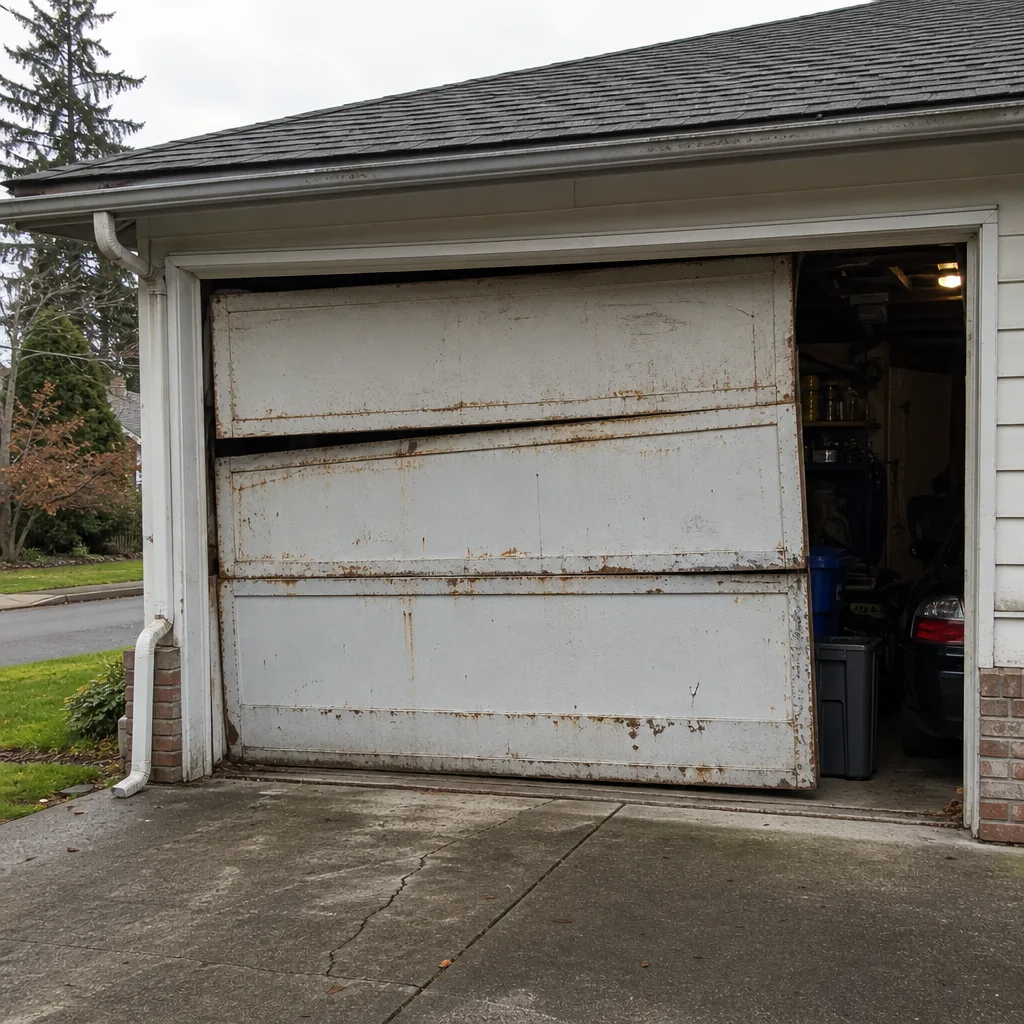 Before
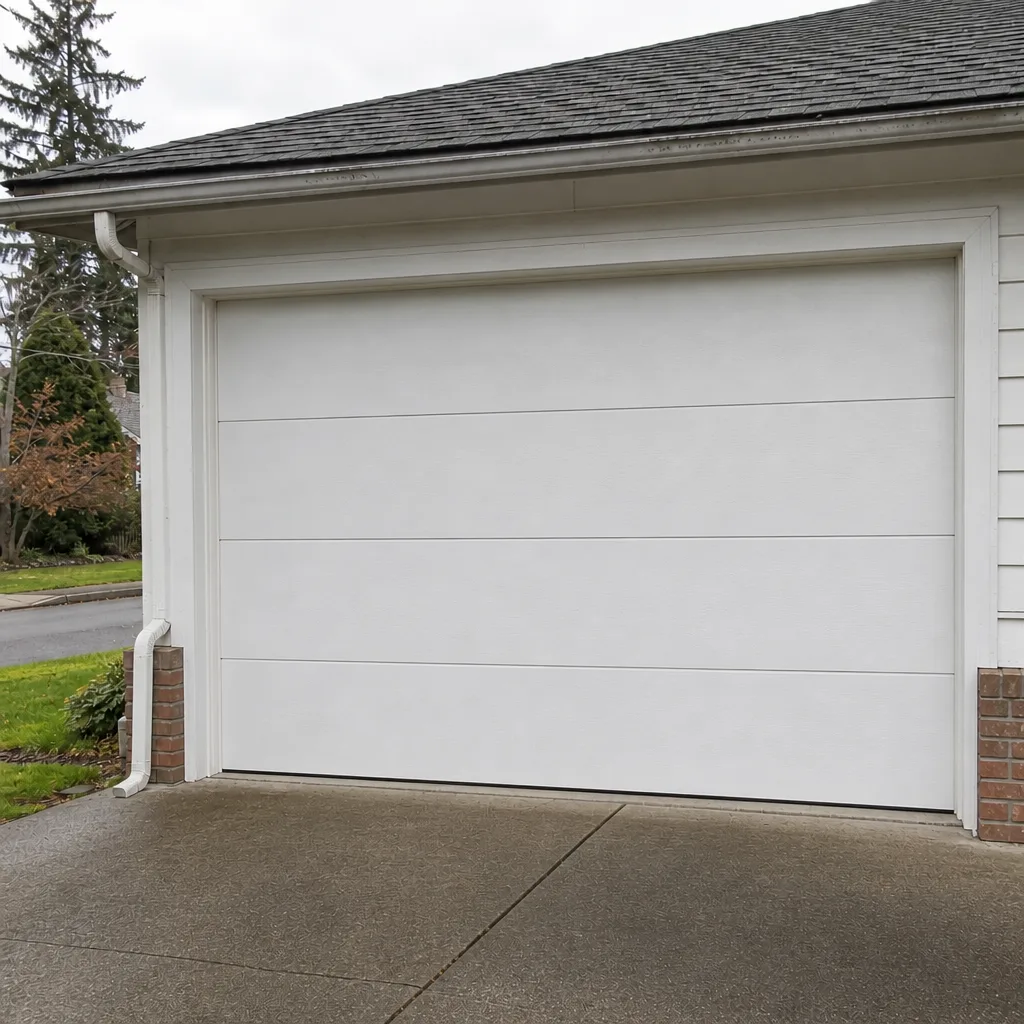 After
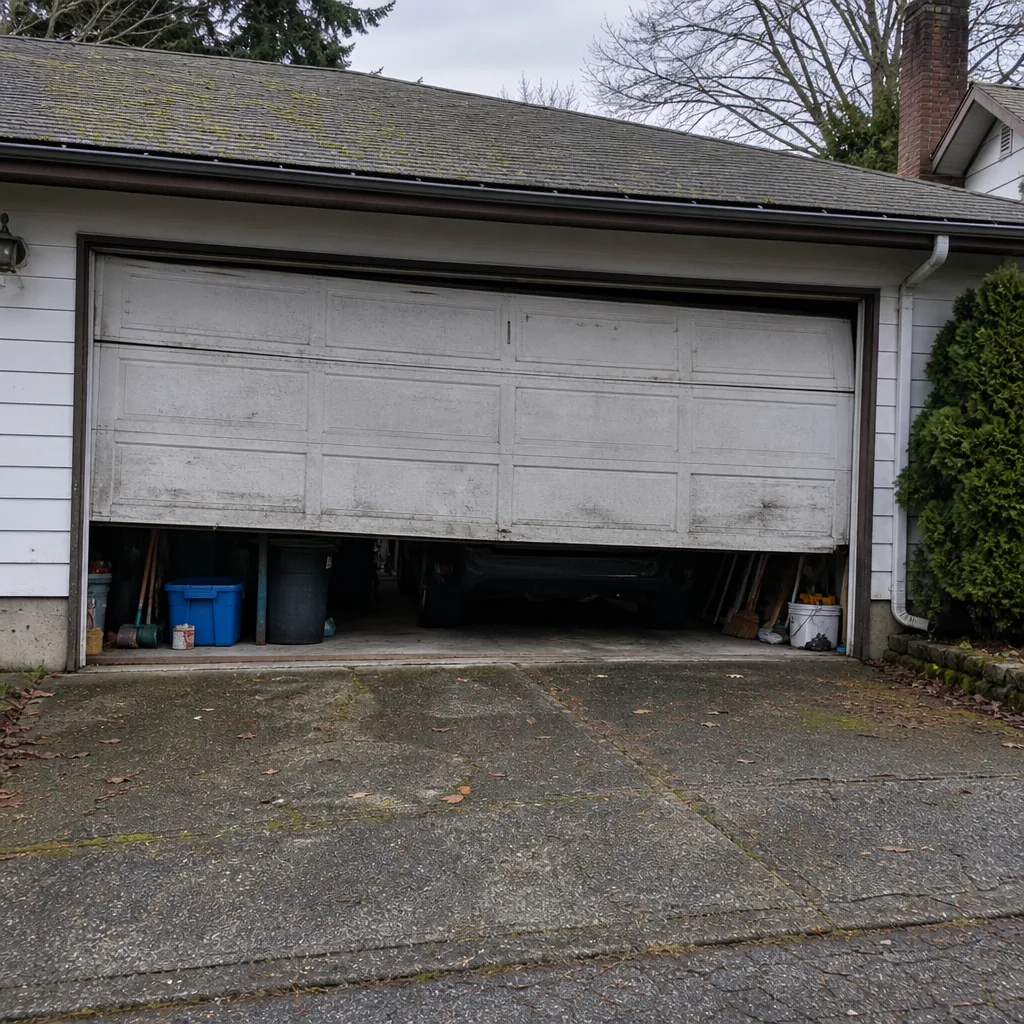 Before
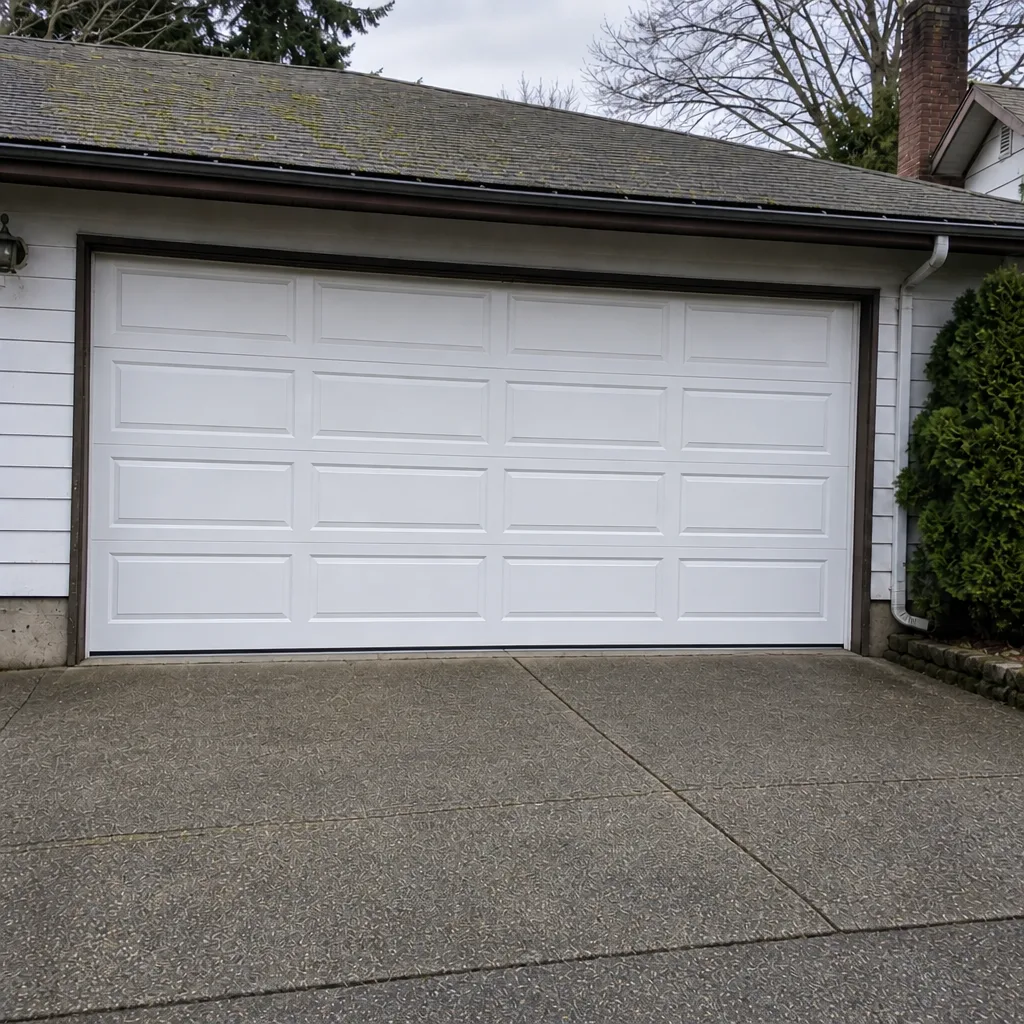 After
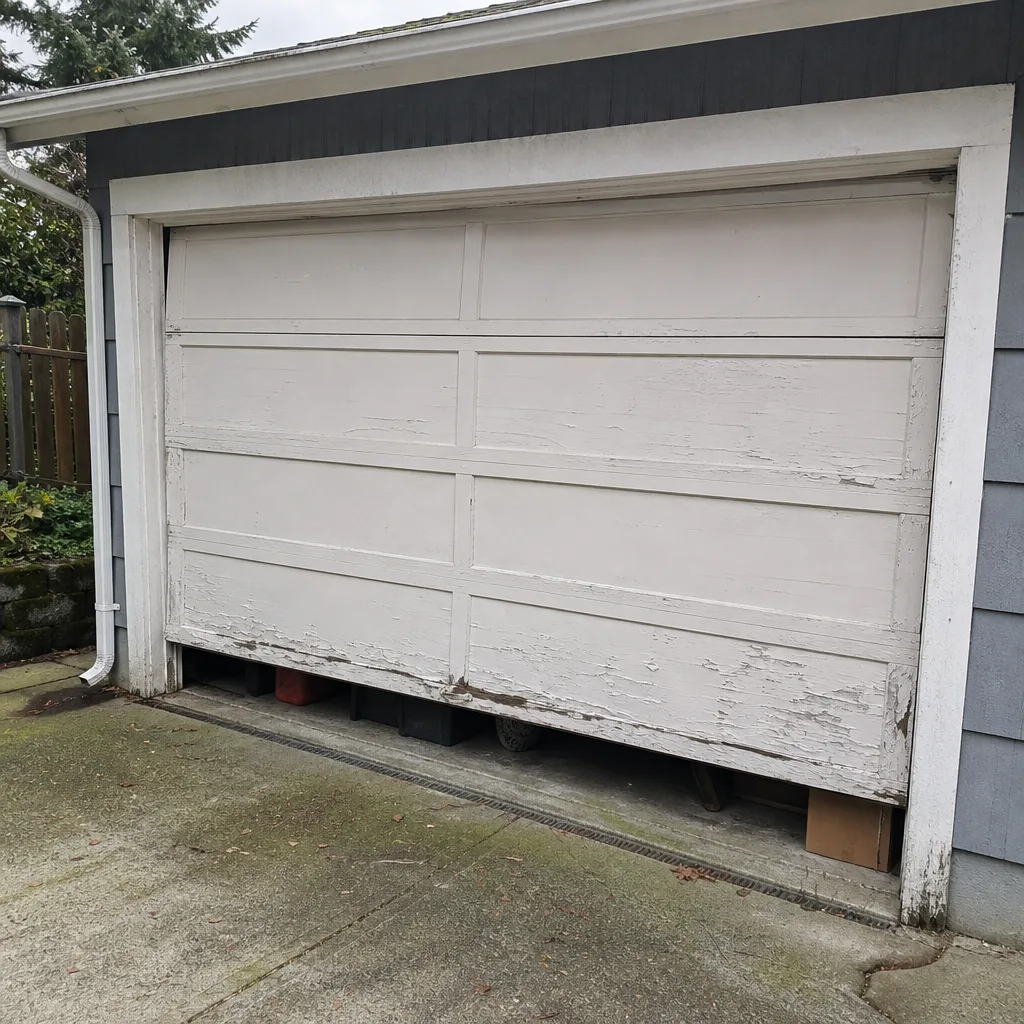 Before
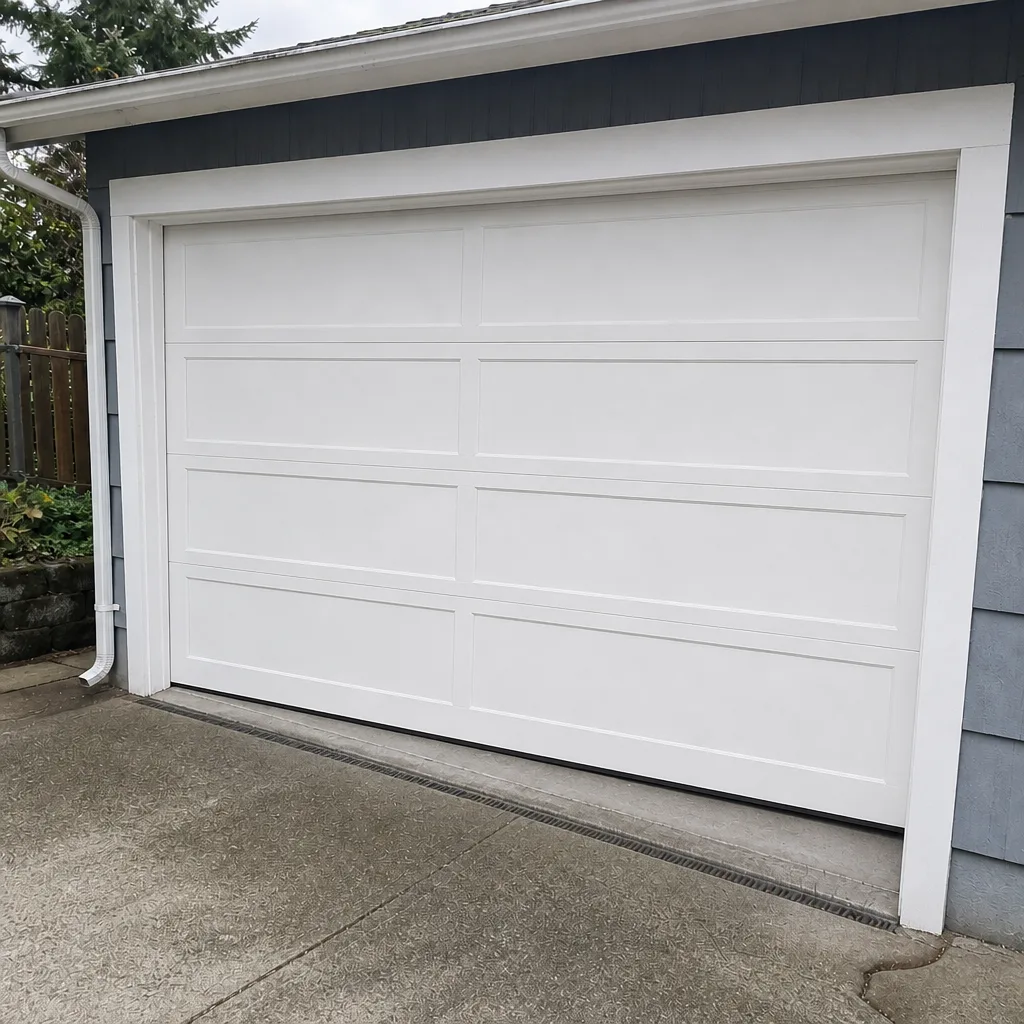 After
When to Call a Professional
Call a technician when the door shows any of four signs: a visible gap in a torsion spring coil, a frayed or slack cable, a door that drifts down on the balance test, or a popping sound near the header. Also call if the door has come off its track, is visibly askew, or is bound up against the opener. Every one of these is a stop-using-the-door problem, not a wait-and-see problem. If the door still works but is louder or slower than it was, a service visit catches the problem before it becomes a failure. Garage Door Repair West Seattle offers free estimates in West Seattle – call (866) 937-8026. The price is quoted and agreed before any work starts, and we carry common parts so most repairs are done on the same visit.
Frequently Asked Questions
The four most important garage door warning signs are a visible gap in a torsion spring coil, a frayed or kinked cable, a door that drifts down when you release it halfway, and any popping or snapping sound from above the door. Each points to a component that’s near failure, and each calls for a technician rather than a DIY fix. Call (866) 937-8026 for a free estimate if you see any of them.
A garage door spring is about to break when you see a rust line along the coil, a gap between two coils, or a door that has become noticeably heavier on the way up. A gap is the closest signal to actual failure – the spring has begun to crack internally. Keep the door down and have a technician look at it. We handle spring replacement regularly across West Seattle, and a paired spring is usually replaced together.
No, a noisy garage door isn’t always a problem – sometimes a squeal or thump is just dry rollers or a loose hinge, and both are easy to fix. But a noise the door didn’t make last year is worth reading: grinding usually means a seized roller, and popping or snapping usually means a spring. If the sound is new, have it looked at. Call (866) 937-8026 and we’ll help you sort which sound means what.
No, garage door springs should only be replaced by a trained technician. Torsion springs store enormous energy, and a wound spring that releases unexpectedly can cause serious injury. The same applies to cables and the bottom bracket. If you’re in West Seattle and the door has a broken or degraded spring, we can look at it the same day – call (866) 937-8026.
The balance test should be run every month, or at least every couple of months through West Seattle’s damp season. The test takes two minutes: open the door, pull the manual release, raise the door halfway by hand, and let go. A door that stays put is balanced. A door that drifts down is a spring losing lift. A door that binds needs a closer look. Call (866) 937-8026 if you’re not sure what the result means.
Yes, a door that’s louder and slower than it used to be needs a service visit. That combination is the most common pattern we see before a garage door breakdown – it usually means the springs are losing lift and the rollers are wearing, and both get worse. A service visit now catches it before a hard failure bends the track or the panel. Call (866) 937-8026 for a free estimate in West Seattle – the price is quoted before work starts.
The Bottom Line
Garage doors tell you they’re failing long before they do. A rust line on a torsion spring, a fuzzing cable, a new grinding sound, a door that drifts down when you release it – each of these is a weeks-early warning, and each one is easy to misinterpret if you don’t know what you’re looking at. Run the balance test monthly, listen to a noise you didn’t hear last year, and treat a coil gap or a frayed cable as a stop-using-the-door signal. West Seattle’s damp garages speed up spring and cable wear, so the wet season is when it pays to look closest. If you’d rather have a technician read the signs for you, our door specialists are experienced with every component from springs to openers, and parts for most common repairs are on hand. For a free estimate on any door in West Seattle, call (866) 937-8026. You can also start with Garage Door Repair West Seattle and we’ll take it from there.
Written by the team at Garage Door Repair West Seattle.